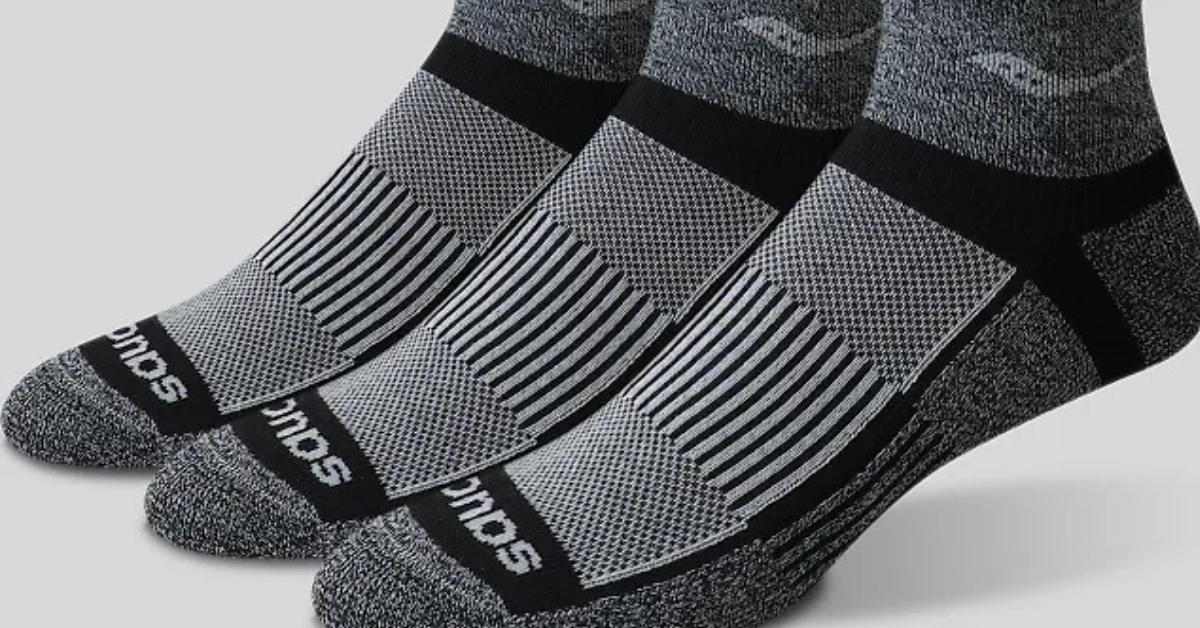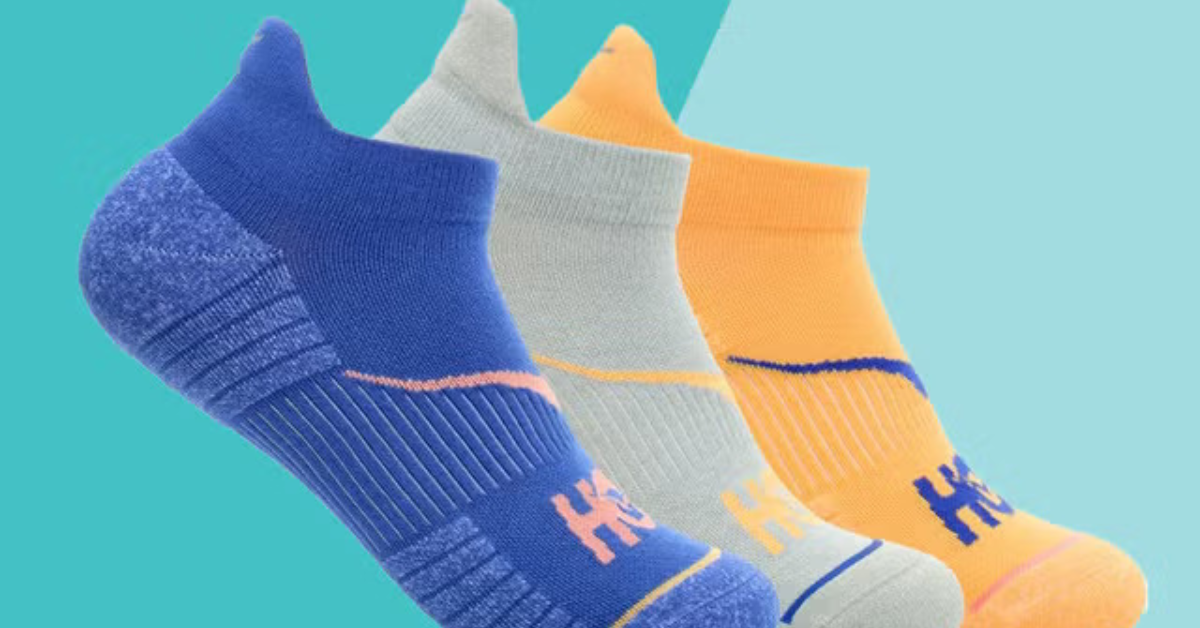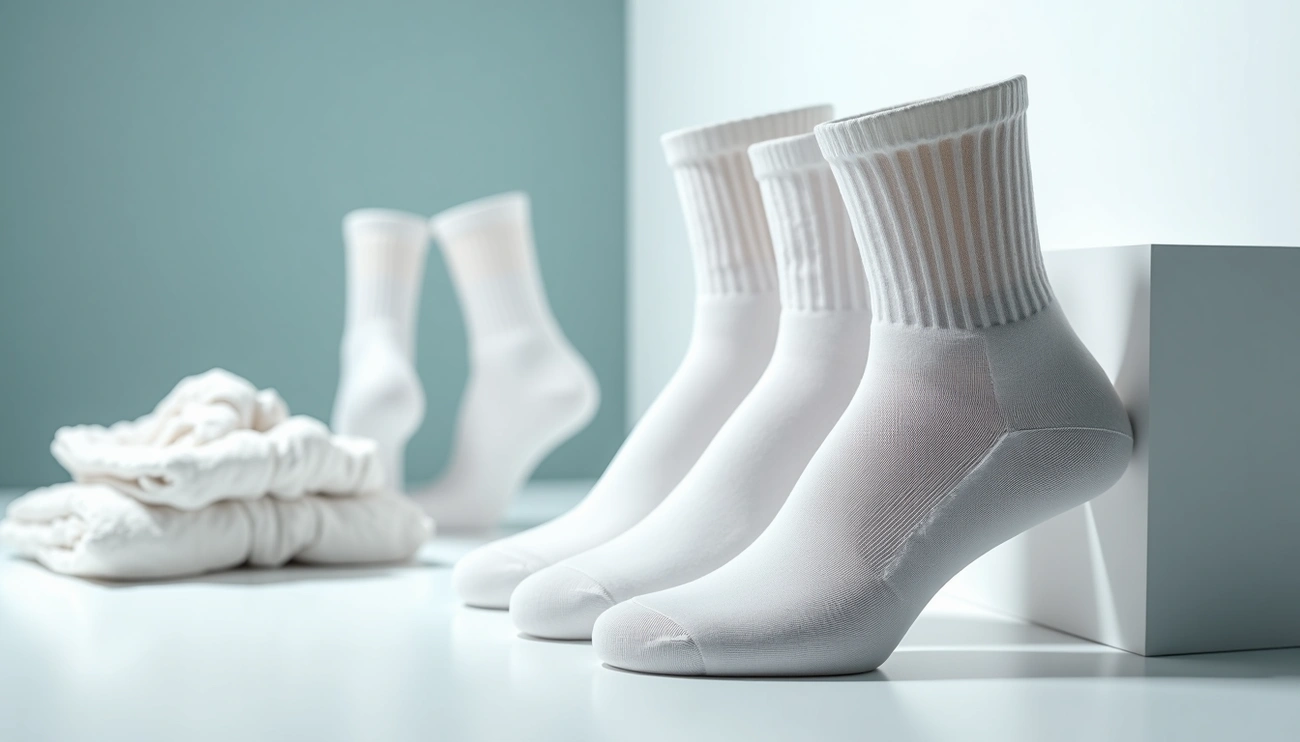
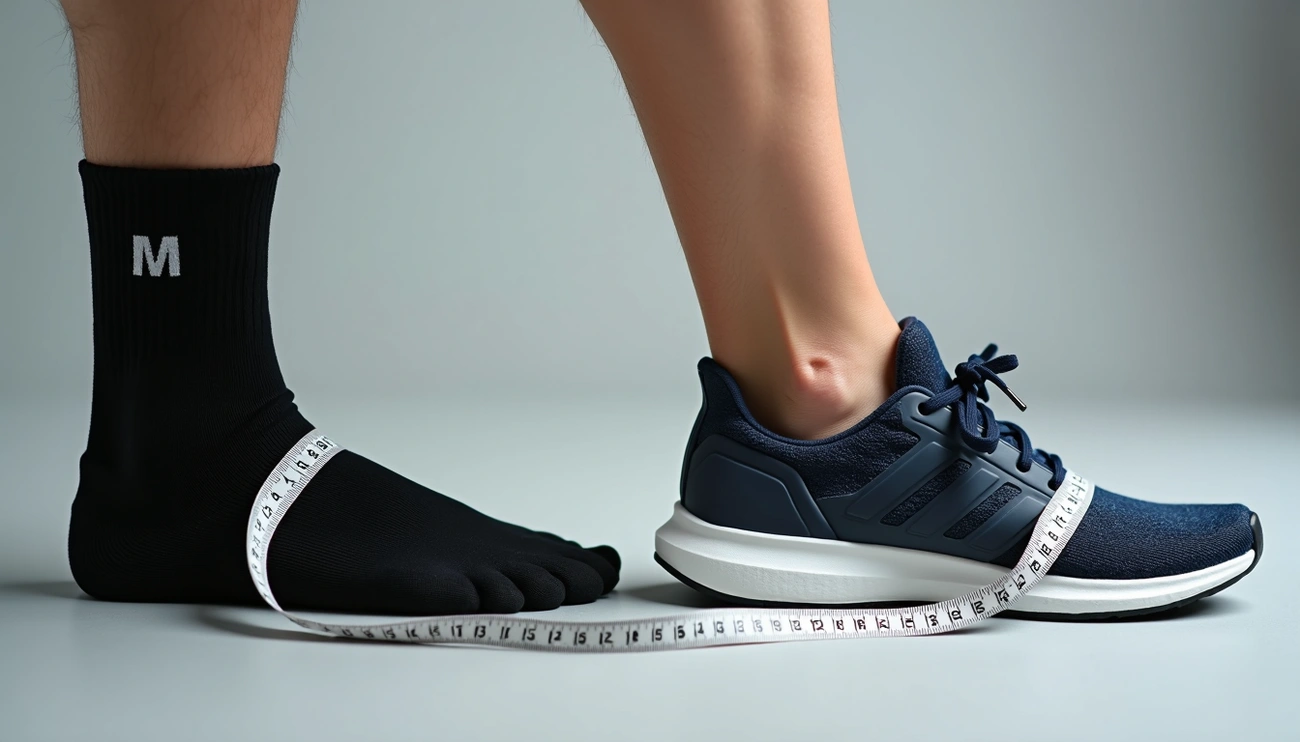
No, sock and shoe sizes are not the same. Sock sizes cover broader ranges, such as a Men’s Large fitting shoe sizes 10–12, because socks stretch and adapt to foot length. Shoes require precise sizing, while socks use ranges or letters like S, M, and L.
What’s the Difference Between Sock and Shoe Sizes?
The fundamental difference between sock and shoe sizes lies in their approach to measurement and fit. Unlike the precise measurements of footwear, sock sizing follows a more accommodating system. Looking at a sock packaging label beside a shoe box reveals this contrast immediately – one shows specific numbers while the other typically displays ranges or letter designations.
Fixed vs. flexible sizing explained
Shoe sizes operate on a fixed numerical system designed to match exact foot dimensions. Each shoe size corresponds to a specific foot length measured in inches or centimeters, with increments typically around 1/3 of an inch (8.47mm) between consecutive sizes. Additionally, shoe sizing accounts for width measurements, often denoted by letters like A (narrow), D (medium), or E (wide).
Socks, conversely, embrace flexibility by design. They utilize a more forgiving sizing approach because of their inherently stretchy nature. Rather than matching the exact dimensions of your foot, sock sizes encompass ranges – for instance, a US men’s sock labeled “Medium” typically fits shoe sizes 6-8.5, while the same size might fit women’s shoe sizes 7-9.5.
This flexibility exists mainly because socks are manufactured with elastic materials that can stretch to accommodate various foot dimensions. The elasticity allows one sock size to fit multiple shoe sizes comfortably, making production more streamlined and inventory management simpler for manufacturers.
Why socks use ranges instead of exact numbers
Sock manufacturers adopt range-based sizing for several practical reasons. First, the stretchable nature of sock materials (like cotton blended with elastane or spandex) means one size can comfortably fit multiple foot lengths. This adaptability eliminates the need for the precise incremental sizing required for rigid footwear.
Second, producing socks in ranges rather than individual sizes simplifies both manufacturing and consumer shopping experience. Instead of stocking dozens of specific sizes, retailers can carry just 4-6 size options (typically S, M, L, XL, etc.) that cover the entire spectrum of foot sizes.
Another key reason for range-based sock sizing relates to production efficiency. Creating fewer size variations reduces manufacturing complexity and costs, allowing companies to offer more affordable products while maintaining quality standards.
The sizing strategy also accounts for the fact that socks compress slightly during wear. Unlike shoes that must maintain rigid dimensions for proper support, socks perform their function even with some variation in fit. A sock that’s slightly smaller than your foot will stretch to accommodate, whereas a shoe that’s too small would cause discomfort or injury.
Moreover, sock sizing prioritizes different fit aspects than shoe sizing. While shoes must fit precisely in length, width, and volume to provide proper support, socks primarily need to stay in place without being too tight or too loose. This fundamental difference in purpose explains why sock manufacturers focus on creating sizes that accommodate ranges rather than precise measurements.
Understanding this distinction helps explain why you might wear a size 10 shoe but a Medium sock, and why European sock sizes might seem confusing when compared to their shoe sizing counterparts. The systems serve different purposes despite both being designed for your feet.
How Do Sock Sizes Work?
Looking beyond the number on your shoe box, socks follow a completely different sizing philosophy. Their unique construction allows for flexibility that your rigid shoes simply cannot match. Let’s unravel exactly how sock sizing operates and why it matters for your everyday comfort.
Stretchable materials and their role
The secret behind sock sizing lies in the carefully engineered blend of materials. Most quality socks incorporate a mix of fibers, each serving a specific purpose:
- Natural fibers (cotton or merino wool) provide the soft, breathable base
- Nylon adds durability to withstand friction and countless wash cycles
- Spandex or Lycra delivers essential stretch and recovery
This combination creates fabrics that conform to your foot’s unique contours. Essentially, these materials work in harmony to produce a garment that can stretch significantly without losing its shape. The elasticity allows socks to accommodate various foot dimensions comfortably, even as your feet slightly swell throughout the day.
Furthermore, the knitting techniques used in sock manufacturing contribute to their adaptability. Ribbed cuffs, anatomical knitting, and elastic bands concentrate tension precisely where needed, allowing the same sock to fit different ankles and insteps without slipping down or feeling restrictive.
Why one sock size fits multiple shoe sizes
Unlike shoes that require precise measurements for proper support, socks perform their function even with some fit variation. A single sock size typically spans 2-3 consecutive shoe sizes. For instance, a Medium sock often accommodates men’s US shoe sizes 6 to 8.5 and women’s 7 to 9.5.
This range-based approach offers several advantages. First, it significantly simplifies manufacturing and inventory management. Instead of producing dozens of specific sizes, companies can create just 4-6 size variations that cover the entire spectrum of foot sizes.
Secondly, the stretchable construction means that socks can adapt to slight differences in foot dimensions without compromising comfort or function. A sock that’s slightly smaller than your foot will stretch to accommodate it, whereas a shoe that’s too small would cause immediate discomfort.
Undeniably, finding the right sock size remains crucial. Socks that are too small will feel uncomfortably tight, leaving imprints on your skin and potentially restricting circulation. Conversely, oversized socks tend to bunch up around your toes or slip down into your shoes, creating friction points that may lead to blisters.
Common sock size labels (S, M, L, XL)
Most sock manufacturers employ letter sizing (S, M, L, XL) to indicate sock dimensions. This simplified system makes shopping more straightforward than navigating precise numerical measurements. Generally, these letters correspond to specific shoe size ranges that vary slightly between brands and genders.
A typical conversion might look like this for men’s sizes:
- Small (S): Fits US shoe sizes 6-8
- Medium (M): Fits US shoe sizes 8-10
- Large (L): Fits US shoe sizes 10-13
- Extra Large (XL): Fits US shoe sizes 13+
Women’s sock sizing follows a similar pattern but shifted to accommodate smaller average foot sizes:
- Small (S): Fits US shoe sizes 5-7
- Medium (M): Fits US shoe sizes 7-9
- Large (L): Fits US shoe sizes 9-11
Major athletic brands like Nike use an even more standardized approach. Their unisex sock sizing chart shows XS fitting men’s sizes 6-8 and women’s 4-6, while M accommodates men’s 8-12 and women’s 6-10.
Although letter sizing seems less precise than numerical shoe sizing, it actually works exceedingly well given the adaptive nature of sock materials. Many brands indicate the corresponding size range on packaging or their websites, making it straightforward to determine which letter size will provide the optimal fit for your feet.
Sock Size vs Shoe Size Charts
Finding the perfect sock fit requires understanding specific size charts, since sock and shoe sizes clearly follow different systems. Let’s decode these sizing tables to ensure your feet stay comfortable throughout the day.
Adult sock size conversion chart
Navigating adult sock sizes becomes straightforward once you understand the lettered sizing system (S, M, L, XL) and how it corresponds to shoe measurements. Unisex socks typically follow men’s sizing standards, so women may need to size down.
A standard adult sock conversion looks like this:
| Sock Size | Men’s US Shoe Size | Women’s US Shoe Size | UK Shoe Size | EU Shoe Size |
|---|---|---|---|---|
| Small (S) | 4-6.5 | 4.5-7 | 2-5 | 35-38 |
| Medium (M) | 6-8.5 | 7-9.5 | 5-7.5 | 38-42 |
| Large (L) | 9-12.5 | 10-13 | 8-11.5 | 43-46 |
| X-Large (XL) | 13-16 | 12-15 | 12-14 | 46-50 |
As you can see, each sock size accommodates a range of approximately 2-3 shoe sizes. This flexibility comes from the stretchable materials discussed earlier.
Kids sock size chart
Children’s sock sizing follows a similar pattern but includes age ranges as a helpful reference point. Certainly, growth spurts can happen suddenly, making regular foot measurements particularly important for growing feet.
| Sock Size | US Kids’ Shoe Size | Approximate Age | UK Size | EU Size |
|---|---|---|---|---|
| XS | Toddler 4-7 | 1-2 years | Up to 6.5 | 19-23 |
| S | Toddler 7.5-11 | 3-4 years | 6.5-10 | 24-28 |
| M | Little Kid 11.5-Youth 1 | 5-7 years | 10-13 | 29-33 |
| L | Youth 2-5.5 | 8-10 years | 13-2.5 | 34-38 |
Kids’ socks are often sized according to developmental stages—infant, toddler, little kid, and youth—rather than just numerical measurements. This practical approach acknowledges how rapidly children’s feet grow.
Are sock and shoe sizes the same in the UK and EU?
No, sock and shoe sizes follow different numerical systems in the UK and EU, just as they do in the US. Nevertheless, the fundamental principle remains consistent: sock sizes cover ranges rather than exact measurements.
In Europe, sock sizing often directly references EU shoe size ranges—for example, a Medium sock might fit sizes 38-42. Meanwhile, the UK system generally corresponds to US sizing but with different numbers assigned.
One key distinction: European sizing uses a more standardized measurement system based on the Paris Point (approximately 2/3 of a centimeter). Consequently, EU sock sizing tends to have higher numbers than UK or US sizing for equivalent foot lengths.
Regardless of region, the stretchy nature of socks allows manufacturers to accommodate multiple shoe sizes within a single sock size, making cross-border shopping simpler than with rigid footwear.
How to Measure Your Foot for the Right Sock Size
Getting the right sock size starts with proper foot measurement. Given that sock and shoe sizes aren’t identical, knowing your exact foot dimensions becomes crucial for everyday comfort.
Step-by-step foot measurement guide
Accurate measurement requires a few simple tools and techniques:
- Find a hard surface – Stand on a non-carpeted floor to ensure accurate readings
- Prepare paper and measuring tape – Place paper against a wall and have a soft measuring tape ready
- Measure foot length – Position your heel against the wall, mark the longest toe on the paper, then measure from the heel edge to the mark
- Measure foot circumference – Wrap measuring tape around the widest part of your foot (usually the ball behind your toes) while standing
- Record both measurements – Keep these numbers handy for future reference
Standing while measuring is important as your body weight naturally spreads your foot, affecting its dimensions. In fact, seated measurements can yield different results—one person’s circumference measured 21.75cm while sitting but increased when standing.
When to size up or down
Making size adjustments based on your specific situation improves comfort substantially:
Size up when:
- Your measurements fall between two sock sizes
- You have particularly wide feet
- You plan to wear thick or cushioned socks
- You prefer a more relaxed, casual fit
Size down when:
- You have narrow feet
- You need a snug fit for activities like trail running
- You’re wearing dress shoes where precise fit matters
Ultimately, sock material elasticity plays a major role in determining whether sizing up is necessary. Materials like spandex or elastane accommodate various foot sizes better than less stretchy options like pure cotton.
Tips for wide feet or in-between sizes
People with wide feet often struggle finding comfortable socks. Hereafter are some practical tips:
For wide feet:
- Choose socks without thick seams across toes to prevent rubbing
- Consider going up one size for better comfort
- Look for socks with higher spandex content for added stretch
For narrow feet:
- Ensure toe seams sit flat and don’t twist around
- Choose a smaller size to prevent sagging
For those caught between sizes, most manufacturers recommend sizing up rather than down. This approach typically provides better comfort without sacrificing fit.
Does Sock Type or Material Affect Sizing?
Materials and construction techniques play a decisive role in how socks fit your feet. The relationship between sock types and sizing goes beyond simple measurements, affecting both comfort and function.
Thick vs. thin socks
Sock thickness directly impacts how your footwear fits. Thick socks provide superior cushioning and insulation but occupy more space in shoes. Indeed, a study found that adding a heavily padded sock demanded an increase in shoe length 77% of the time. Conversely, thin socks offer better breathability and a snug fit in tight shoes.
Thick socks excel in:
- Superior insulation during cold weather
- Enhanced padding for high-impact activities
- Reduced friction and blister prevention
Thin socks, meanwhile, provide:
- Better ventilation for temperature regulation
- Closer fit for responsive control during activities
- Quicker drying times after exposure to moisture
Compression and performance socks
Compression socks require a fundamentally different sizing approach. These specialized garments create a pressure gradient, applying maximum pressure at the ankle that gradually decreases toward the top. Ultimately, this design promotes circulation—beneficial for those standing or sitting for extended periods.
Performance socks typically incorporate targeted cushioning in high-impact areas. Many athletic styles feature moisture-wicking capabilities to keep feet dry during intense activities. Their sizing must accommodate both foot dimensions and specific performance needs.
Impact of cotton, wool, and spandex blends
Material composition substantially affects sock sizing and comfort:
- Cotton absorbs moisture but offers limited stretch, potentially causing fit issues after washing
- Wool (especially merino) provides natural elasticity and maintains shape well, adapting to different foot volumes
- Synthetic fibers like polyester, nylon, and spandex improve durability and ensure consistent fit
Notably, fabrics with high spandex content offer better accommodation for foot size variations, making them ideal for those between standard sizes.
Conclusion
Understanding the distinction between sock and shoe sizes ultimately makes a significant difference in your everyday comfort. While shoes follow rigid numerical measurements based on precise foot dimensions, socks embrace flexibility with their range-based sizing system. This fundamental difference explains why you might wear a size 10 shoe but reach for Medium socks when shopping.
The stretchable materials used in sock manufacturing allow one size to comfortably fit multiple foot lengths. Therefore, manufacturers can simplify production with just a few size variations (S, M, L, XL) rather than dozens of specific measurements. Though this system might seem less precise at first glance, it actually works exceptionally well thanks to the elastic properties of materials like spandex and nylon.