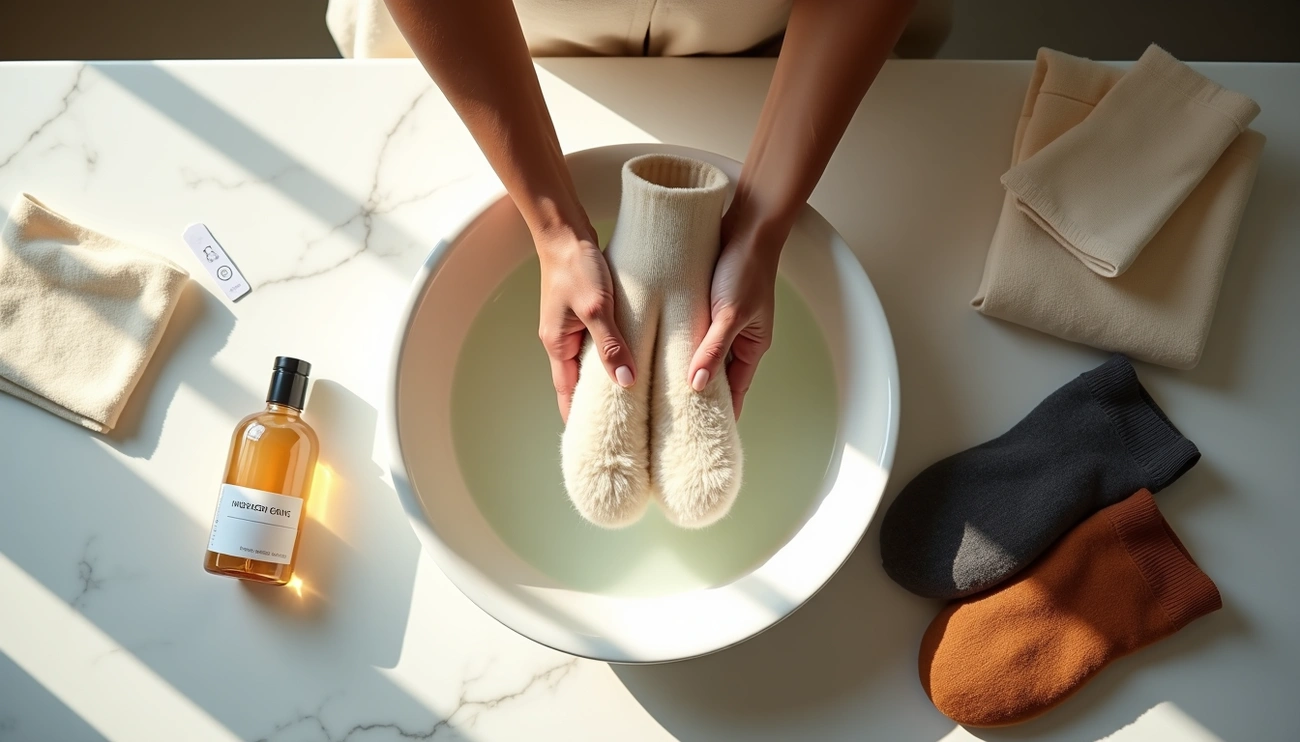
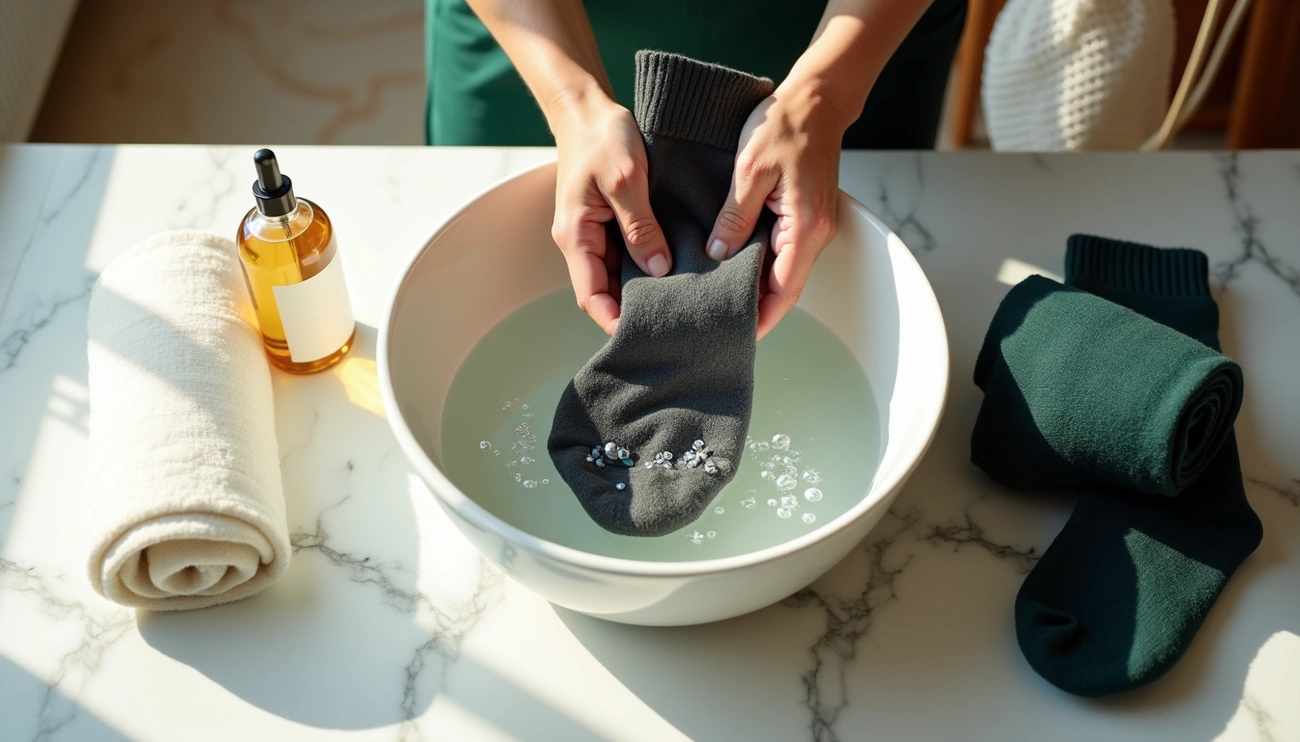
Wash wool socks inside out in cold water using a gentle, wool-safe detergent on a delicate cycle or by hand to protect fibers. Avoid bleach, fabric softeners, and high heat, which cause shrinkage. Air dry socks by laying flat or hanging to maintain shape and durability.
How Often Should You Wash Wool Socks

Why Merino Wool Needs Less Washing
Wool fibers possess unique properties that set them apart from cotton and synthetic materials. Wool can absorb large quantities of water vapor, twice as much as cotton and thirty times as much as polyester, helping to keep skin drier and prevent the buildup of sweat and bacteria. The fiber’s hygroscopic nature allows it to absorb up to 35 per cent of its own weight in moisture while keeping the skin surface drier and discouraging bacterial growth.
Beyond moisture management, wool actively absorbs and locks away odors within the fiber where bacteria do not thrive. Research shows that wool fabrics retained 66 per cent less body odor intensity than polyester fabrics and 28 per cent less than cotton fabrics. This means your socks stay fresher for much longer between washes.
Wool also refreshes itself when aired out between uses. As moisture evaporates from the fibers, it carries trapped odor molecules with it. The scales on the fiber’s surface help release dirt and bacteria during this process, explaining why wool garments feel fresher after hanging them in fresh air overnight.
Signs Your Wool Socks Need Cleaning
Visual inspection provides the most obvious clues. Look for visible soil, stains, or areas where the wool appears matted or compressed. These signs indicate cleaning time regardless of how many wears you’ve accumulated.
The smell test remains reliable. While wool socks won’t develop strong odors as quickly as other materials, any unpleasant smell when removing the socks signals they need washing. Texture changes offer another indicator. Fresh wool socks feel springy and soft against your skin. When they begin feeling less elastic or slightly rough, washing will restore their natural properties.
Recommended Washing Frequency
For light indoor wear or office work, you can comfortably wear quality wool socks 4-5 times before washing. More intensive activities require different approaches. After heavy sweating, visible dirt, or extended wear of 12+ hours, plan on washing after 2-3 wears.
As a general rule, wash merino wool socks after three wears. However, your specific washing schedule depends on how long you wear them per use, the activity, climate, and your comfort level with re-wearing clothing. Airing them out between wears and rotating pairs extends freshness.
How to Wash Wool Socks Step-by-Step

Washing wool socks requires a specific approach to maintain their integrity. Follow these steps for optimal results.
Step 1: Turn Your Socks Inside Out
Start by turning your wool socks inside out before washing. This exposes the areas where sweat, oils, and odor-causing bacteria accumulate, allowing the wash cycle to lift away buildup more effectively. Turning socks inside out also reduces friction on the outer surface, which helps maintain patterns and colors while preventing pilling. For socks with cushioning created by terry loops, this step becomes particularly important as dirt and debris get caught in those loops.
Step 2: Choose the Right Water Temperature
Use cold or lukewarm water at approximately 30°C maximum. Hot water causes wool fibers to shrink. Cold water preserves the fabric and elasticity of wool socks while preventing the shrinkage that occurs when fibers are exposed to heat. If your care label suggests 40°C, stay at the lower end for safety.
Step 3: Select a Gentle Detergent
Choose a mild detergent with a neutral pH that’s preferably Woolmark-recommended. Wool and merino fibers require enzyme-free detergent to avoid damage. Never use bleach or fabric softener on wool socks, as these products can damage the fibers and compromise their natural properties.
Step 4: Use the Proper Wash Cycle
Set your washing machine to the wool cycle, or use the cold water wash or delicate cycle if a wool setting isn’t available. These settings minimize agitation, reducing the risk of shrinkage while preserving texture.
Step 5: Consider Using a Mesh Laundry Bag
Place your socks in a mesh laundry bag for added protection during washing. The bag acts as a protective shield, reducing friction between socks and other items while preventing stretching, fraying, or tearing. This also solves the mystery of missing socks by keeping pairs together throughout the washing cycle.
How to Dry Wool Socks Without Shrinking

Drying methods determine whether your wool socks maintain their original size and softness. High temperatures cause wool fibers to contract and lose their shape, so gentle drying techniques are non-negotiable.
Air Drying vs. Machine Drying
Air drying remains the safest approach for wool socks. After washing, gently squeeze out excess water without wringing or twisting, as this stretches fibers and damages their natural elasticity. Lay socks flat on a clean, dry towel in a well-ventilated area away from direct sunlight. Reshape them while damp to maintain proper fit and structure. Avoid hanging wet wool socks, since gravity pulls the water weight down and distorts the fabric.
Machine drying carries risk but works when done carefully. Wool fibers can hold up to 30% of their weight in moisture, making them slower to dry than synthetics.
Best Practices for Tumble Drying
If using a dryer, select the lowest heat setting or wool-specific cycle. Place socks in a mesh laundry bag to reduce friction and prevent pilling. Remove socks while slightly damp and finish air drying flat. Never tumble dry completely, as over-drying stiffens fibers.
How to Speed Up Drying Time
Roll damp socks in a dry towel and press gently to absorb moisture without wringing. This towel roll method significantly reduces drying time. Position socks in a well-ventilated room or use a fan to increase airflow. A dehumidifier also accelerates drying in humid environments.
What Not to Do When Washing Wool Socks

Certain laundry practices destroy wool fibers and cause irreversible damage. Knowing what to avoid protects your investment.
Avoid These Laundry Items
Never wash wool socks with lint-producing items such as towels or blankets. The socks pick up lint that becomes nearly impossible to remove. Similarly, avoid rough fabrics like denim, zippers, and hooks. These items cause abrasion and accelerate wear through excessive friction. Washing wool with synthetics that pill introduces microfibers that cling to wool and reduce breathability.
Never Use These Products
Bleach destroys merino wool fibers on contact. Fabric softener coats wool fibers and reduces their natural moisture-wicking properties. Regular detergents with alkaline compounds or enzymes break down protein fibers, causing permanent damage. Choose pH-neutral, enzyme-free detergents instead.
Temperature Mistakes to Avoid
Hot water causes wool to felt and shrink. High heat damages elasticity and shortens lifespan. Sudden temperature changes shock fibers and contribute to felting.
Storage Tips After Washing
Store completely dry socks in breathable spaces to prevent mold and mildew growth. Avoid tight compression or plastic bags that trap moisture. Fold your socks rather than rolling one over the other, as this unnecessarily stretches the cuff and causes misshapen socks.
Conclusion
You now have everything you need to keep your wool socks soft, fresh, and shrink-free for years. The secret lies in cold water, gentle detergent, and air drying. Most important, remember that wool’s natural properties mean less frequent washing compared to other fabrics.
Follow these steps consistently, and your wool socks will maintain their quality and comfort. As a result, you’ll protect your investment while enjoying cozy feet season after season.