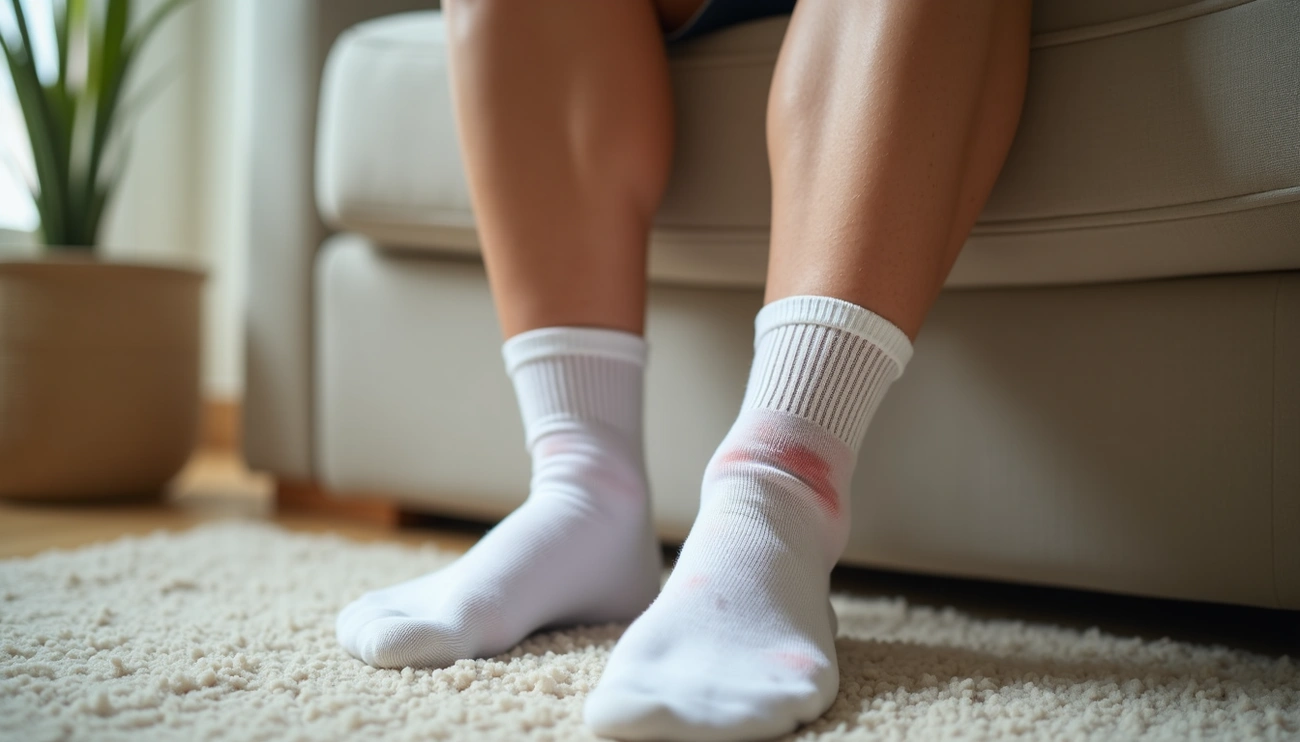
Socks feel tight due to swelling in the lower legs, poor sizing, or restrictive elastic bands. Peripheral edema from prolonged sitting, standing over 6–8 hours, or high sodium intake increases pressure. Socks that are too small or over-compressive reduce circulation and cause discomfort.
Common Signs Your Socks Are Too Tight
Recognizing when socks are too tight starts with knowing what to look for on your legs and feet. Not all sock marks signal a problem, but certain patterns deserve attention.
Visible indentations and marks on your legs
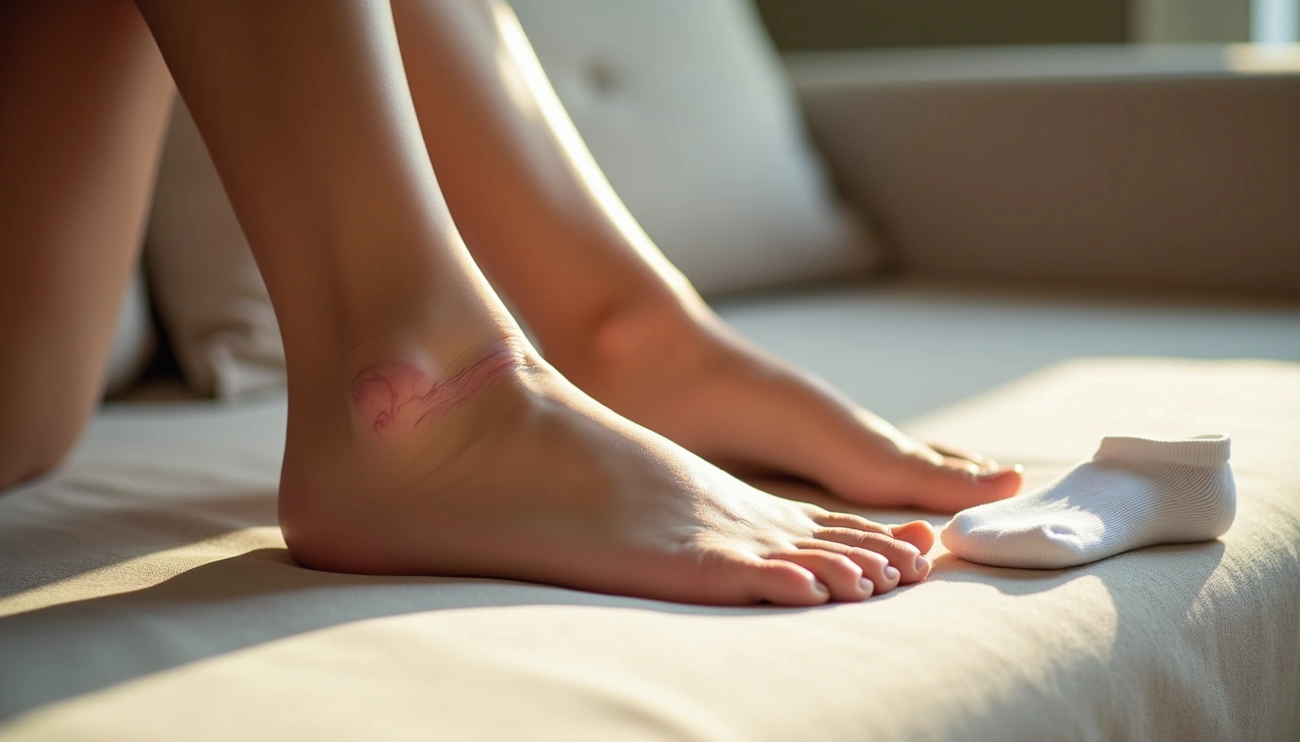
Faint impressions from socks are completely normal. The elastic band naturally presses against your skin, leaving temporary marks. However, if you notice deep lines or imprints where your socks were, it indicates they are compressing your skin too much. The timing matters. Deep sock line indentations that persist for more than 30 minutes after removal suggest something beyond simple pressure.
One quick check helps distinguish normal marks from potential swelling. Press your finger into the indented area. If the skin springs back right away, that’s usually simple pressure. If you see a lasting dent that stays visible, that can look like pitting edema, which is a sign of fluid in the tissue. Lines that fade within 10 to 30 minutes are often just compression, but if the marks remain for hours and repeat daily, your body may be retaining fluid.
Discomfort or squeezing sensation
The most apparent sign that your socks are too tight is discomfort. A constant squeezing sensation around your feet or legs signals you need to reassess your sock choice. Discomfort can manifest as a dull ache or sharp pain, especially after wearing them for an extended period. Equally important is a feeling of heaviness in your lower legs, particularly after standing or walking.
Numbness or tingling in your feet
Numbness or tingling sensations in your toes or feet indicate your socks are too tight. This occurs when compression restricts blood flow. If socks are too tight, they can lead to numbness, bruising, skin irritation, and even exacerbate nerve pain. Pins-and-needles sensations often precede normal feeling as circulation returns.
Swelling around ankles or calves
Ankle puffiness that extends beyond just the sock line area signals restricted circulation. If your feet or ankles tend to swell after wearing socks, this could be a sign of restricted circulation due to tight socks. Skin that looks shiny or stretched around the ankle and lower calf accompanies this swelling.
Why Your Socks Feel Too Tight: The Real Reasons
Sizing mistakes account for most tight sock complaints. If you can see your toes pressing against the toe seam or the heel pocket sits below your actual heel, you need a larger size. Measure at the end of the day when your feet are slightly swollen, as this represents your foot at its largest. For over-the-calf socks, measure around the widest part of your calf. If your calf measures over 17 inches, look for wide-calf options or socks with extra stretch. Additionally, most socks shrink slightly after the first few washes, especially cotton-heavy blends.
You’re wearing the wrong sock size
Poor sock sizing can restrict circulation and cause discomfort. Socks that are too small feel overly tight when new, leaving imprints on your skin, especially around your calves. They can even be painful or cut off circulation in extreme cases. Choosing a size based solely on length without considering width results in socks that feel too tight.
The elastic band is too restrictive
Some socks have elastic bands at the top for staying in place, but if they’re too tight, they can constrict circulation. The right calf fit stays in place without leaving indentation marks on your skin. If the top of the stocking at the thigh or calf is too tight, it can create a tourniquet effect that blocks or slows your blood flow.
Your legs are retaining water
Standing or sitting in the same position for too long causes fluid buildup. Eating too much salty food contributes to water retention. When our body retains more salts, fluid is drawn into the tissues to cause swelling.
Medical conditions causing swelling
Venous insufficiency occurs when veins struggle to carry blood back to the heart against gravity, allowing fluid retention in feet and legs. Chronic venous insufficiency causes blood pooling and flows backwards, increasing venous pressure which leads to swelling.
Heat and prolonged standing effects
Heat causes blood vessels to naturally expand, allowing fluid to leak into surrounding tissues. Paired with gravity encouraging larger volumes of fluid down into the legs, you get swollen feet and ankles. Prolonged periods of sitting or standing without regular movement contributes to poor circulation because calf muscles aren’t regularly contracting around veins.
When Should You Be Worried About Tight Socks
Most sock marks fade quickly and pose no health risk. However, certain patterns require medical evaluation.
Persistent marks that last for hours
Normal sock indentations disappear shortly after removing your socks. Deep, lasting marks around your ankles or calves that stay for more than 15 to 20 minutes may indicate your socks are too tight. If the indentations are deep and last for a long time, more than an hour, you should see a doctor. Lines that remain for hours and repeat daily suggest your body is retaining fluid or your footwear fit is consistently too tight.
One leg swelling more than the other
Swelling that occurs in only one leg should be assessed quickly. Peripheral edema in only one leg is never normal and requires urgent medical attention. One-sided swelling may indicate a blood clot or deep vein thrombosis (DVT). Sudden swelling with intense pain, warmth, and redness may indicate DVT, requiring immediate evaluation to prevent complications.
Socks cutting off circulation with serious symptoms
Compressing your calf can close off the arteries providing blood to the foot. Reduced blood flow can lead to intense pain that appears after walking and only improves when you rest. Consequently, limits on blood flow can increase the possibility of complications such as skin ulcers. Feet or toes that feel unusually cold or look pale, bluish, or blotchy signal restricted blood flow.
Signs of underlying health conditions
Persistent swelling may indicate circulation problems that require evaluation. Chronic venous insufficiency occurs when veins struggle to return blood to the heart, causing blood pooling. Blood clots or DVT can block blood flow, presenting with sudden swelling, warmth, redness, and tenderness in one leg. Heart, kidney, or liver issues may cause fluid retention, presenting with generalized swelling, fatigue, shortness of breath, or jaundice.
What to Do About Tight Socks: Practical Solutions
Finding relief from tight socks starts with addressing the root cause. Here’s what works.
Choose properly sized socks
Your shoe size determines your sock size. Match your shoe size to the sock sizing chart, as sock sizes fit 2-3 shoe sizes. Try socks on before purchasing to ensure your toes reach the seam and heel padding aligns properly. If you fall between sizes, size up.
Look for non-compressive sock technologies
Non-binding socks feature loose tops without elastic bands that avoid sock ring imprints. Look for socks with soft tops that don’t leave marks on your skin. These designs allow circulation to flow unimpeded.
Try compression socks if you need support
Compression socks apply graduated pressure, tighter at the ankle and looser up the leg, to improve blood flow and reduce swelling. They benefit people with venous insufficiency, prolonged standing, or pregnancy. Start with 15-20 mmHg compression. People with diabetes or vascular disease should consult a doctor before wearing compression socks.
Reduce water retention naturally
Elevate your feet above heart level while sitting. Reduce salt intake. Exercise regularly to promote circulation. Drink enough water, as dehydration increases fluid retention.
When to consult a doctor or podiatrist
See a doctor if swelling persists, worsens, or affects only one leg. Recurring pain, unusual sensations, or diabetes history warrant professional evaluation.
Conclusion
Tight socks usually point to simple sizing issues or restrictive elastic bands. Above all, if your sock marks fade within minutes, you have nothing to worry about. However, persistent indentations, one-sided swelling, or numbness require medical attention.
Start by choosing properly sized, non-binding socks that match your foot measurements. If swelling persists even with the right fit, consult your doctor. Your comfort matters, and at any rate, addressing tight socks early prevents bigger problems down the road.