No, crew socks are not considered dress socks. Crew socks reach mid-calf but usually use thicker cotton fabric designed for casual or athletic wear. True dress socks use thinner materials such as fine wool or silk and fit smoothly inside slim dress shoes without added bulk.
What Are Crew Socks?
Crew socks sit at mid-calf height, creating a distinct silhouette that sets them apart from other sock styles. This positioning makes them the most recognized sock type in your drawer.
Crew Sock Height and Fit
The defining characteristic of crew socks is their length. These socks rise 6-8 inches above the heel, landing roughly at the widest part of your calf muscle. This measurement positions the sock top at mid-calf, creating coverage that extends beyond the ankle without reaching knee height.
This specific height serves a practical purpose. When you’re standing, crew socks remain hidden under most pant types, from jeans to dress trousers. The ribbed cuff at the top helps keep the socks in place throughout the day. An elasticated top provides a secure fit without excessive tightness, maintaining comfort during extended wear.
The construction includes features designed to prevent common sock problems. Consistent elastic tension around the opening grips your calf without leaving marks or sliding down. If the elastic is too tight, you’ll see compression marks. Too loose, and the sock migrates toward your ankle.
Material Construction
Material selection determines how crew socks perform across different conditions. Cotton remains the most common choice for crew socks, prized for its softness and breathability. Cotton fibers absorb moisture effectively while maintaining their feel over repeated washes. High-quality options use combed cotton or Egyptian cotton, both offering smoother textures and longer durability.
Merino wool provides temperature-regulating properties that work year-round. This natural fiber wicks moisture away from skin while offering odor resistance and support for feet and calf muscles. Equally effective in cold and moderate weather, wool crew socks adapt to your body’s needs.
Synthetic materials like polyester and nylon bring durability and moisture-wicking capabilities to crew socks. These fibers excel in athletic applications where quick-drying properties matter. Bamboo has gained traction for its eco-friendly nature and natural antibacterial properties, making it suitable for those concerned about foot odor.
Many manufacturers blend materials to capture multiple benefits. A typical blend might combine 86% cotton with 13% polyamide and 1% elastane, balancing breathability with durability and fit. By the same token, performance blends use alpaca fiber with polyester and nylon. Alpaca fiber delivers softness and moisture-wicking, polyester adds shape retention, and nylon provides flexibility for a snug fit.
Cushioning and Comfort Features
Crew socks incorporate cushioning in strategic locations to reduce foot stress. Quality pairs feature extra padding in the sole and heel areas, absorbing impact during movement. This placement benefits anyone spending long periods standing or walking, preventing foot fatigue through targeted support.
Reinforced toe and heel construction protects the highest-friction zones. Extra material in these areas prevents holes from forming, extending the sock’s lifespan. An arch support band wraps around the midfoot, keeping the sock from bunching inside shoes. This band matters more than you’d think since a shifting sock creates friction and discomfort.
Flat toe seams eliminate the pressure ridge that bulky seams create against your toes. Hand-linked or seamless construction removes this irritation point entirely. Cushioning levels vary based on intended use. Full cushion options provide padding throughout the entire sock, including the ankle and top of the foot. Standard cushion socks place padding along the bottom and in high-wear areas like heels and toes.
What Are Dress Socks?

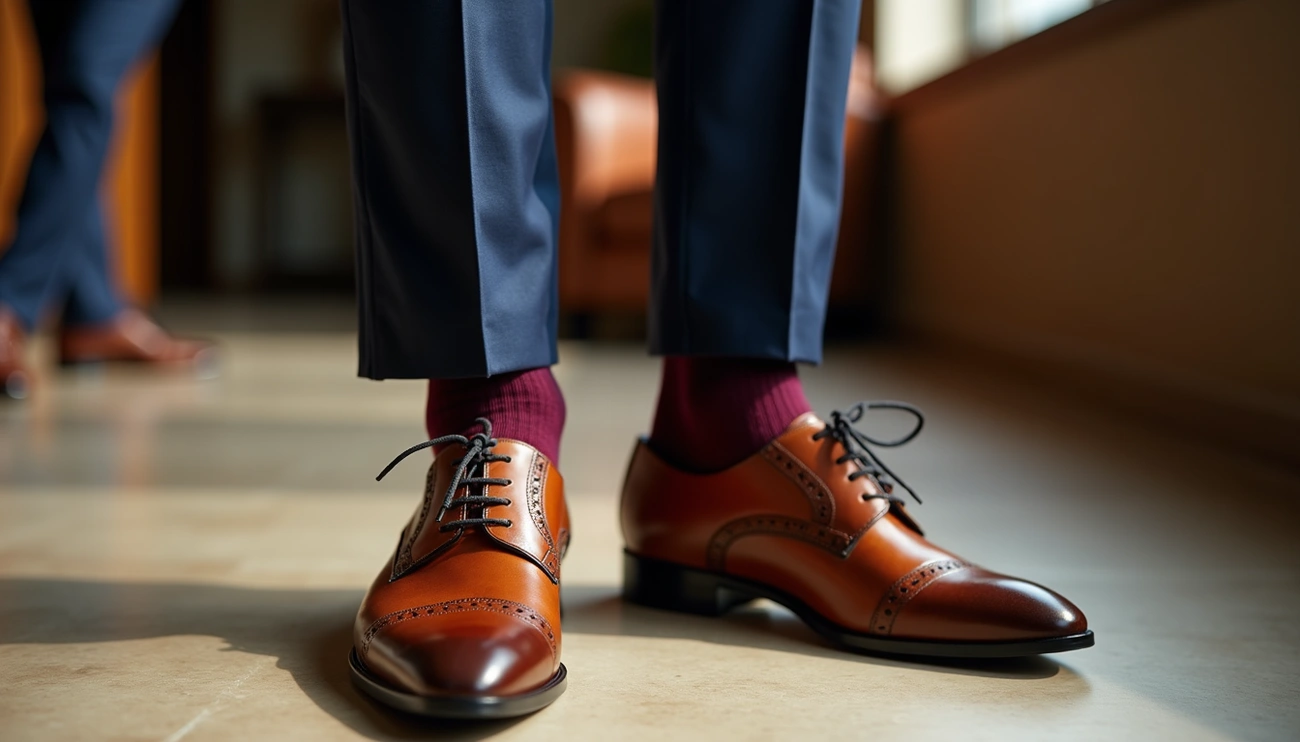
Dress socks serve a singular purpose: pairing seamlessly with formal and business-casual footwear without disrupting the clean lines of your outfit. Unlike crew socks with their robust construction, dress socks are engineered to disappear inside dress shoes, loafers, and oxfords.
Dress Sock Construction and Thickness
The defining feature of dress socks is their ultra-thin profile. These socks are knit to fit inside formal dress shoes without causing hot spots or blisters. Fine gage knitting creates this refined surface, packing more stitches per inch than athletic or casual socks. This tighter knit produces a smooth texture that won’t bulk up inside the narrow confines of dress shoes.
Dress socks feature minimal cushioning compared to crew socks. The thin construction works with the refined interior of dress shoes rather than providing impact protection. This design choice maintains comfort during extended wear while preserving the sleek appearance formal occasions demand. Quality pairs incorporate hand-linked toe seams or flat machine seams that won’t create pressure points against your toes.
The construction varies across different zones within a single sock. Manufacturers rarely use one material or method throughout the entire length. Some zones provide extra compression to keep the sock positioned correctly, while mesh-like areas improve breathability. Reinforced heels and toes handle the durability demands without adding unnecessary bulk.
Premium Materials Used
Merino wool stands as the gold standard for dress socks. This natural fiber wicks moisture, reduces odors, and regulates temperature. Merino keeps feet cool in warm conditions and warm when temperatures drop. Wool dress socks excel at moisture control and odor resistance during long workdays.
Cotton remains a classic option, particularly long staple cotton varieties. Cotton dress socks offer breathability, softness, and versatility for year-round wear. They pair easily with most trousers and shoes, making them reliable staples. Bamboo fabric has gained popularity for its natural moisture-wicking properties and lightweight feel.
Silk appears in the most formal dress socks for black-tie occasions. By the same token, cashmere provides luxury for those seeking premium options. Nylon and synthetic blends add durability and elasticity when mixed with natural fibers. These blends help socks retain shape and resist wear. Natural fibers consistently outperform synthetics in breathability and moisture management.
Height Variations
Dress socks come in multiple heights matched to different formality levels. Over-the-calf socks reach just below the knee, representing the gold standard for formal occasions[73]. This height stays in place throughout the day because the top band rests on the narrower portion of your leg below the knee. Showing bare skin when seated ranks as a significant fashion error in professional settings.
Mid-calf socks sit slightly longer than crew length while falling short of the knee. They work well for business-casual outfits and everyday office wear. Crew dress socks bridge formality and casual comfort. No-show dress socks create a sockless appearance suitable for loafers with summer pants.
Traditional styling rules dictate that formality determines sock height. Black-tie events call for over-the-calf styles, while work gatherings might suit crew lengths. Summer weddings could accommodate no-show options.
Dress Socks vs Crew Socks: Key Differences

Understanding what each sock type offers separately helps, but the real clarity comes from direct comparison. The distinctions between dress socks vs crew socks affect everything from how your shoes fit to how you’re perceived in professional settings.
Construction and Thickness Comparison
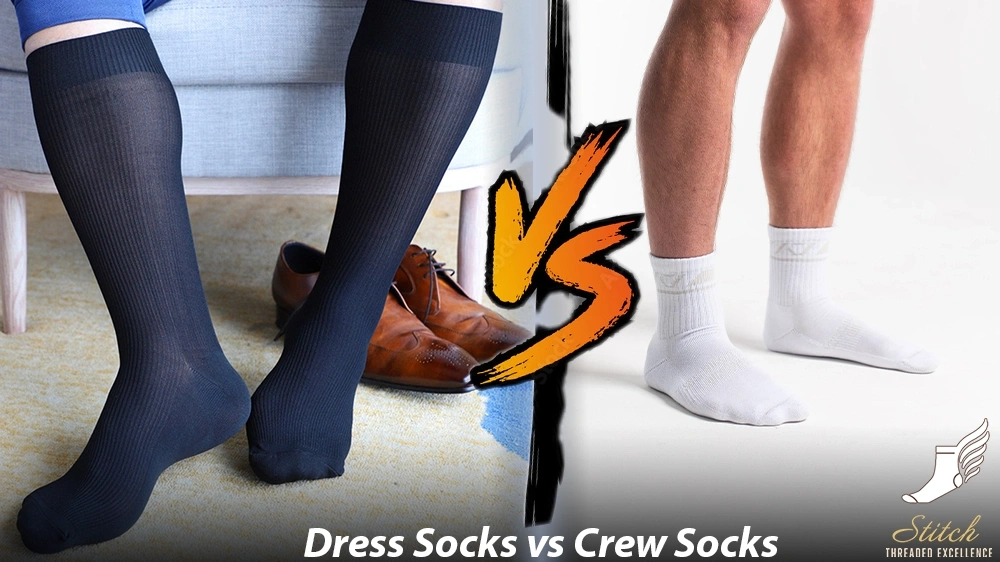
The fundamental difference in dress socks vs crew socks starts with how they’re knitted. Dress socks are typically knitted with higher needle counts, around 200 needles, resulting in a thinner, more elegant sock. Crew socks, on the other hand, use lower needle counts between 144-168 needles, creating more cushioning and durability. This construction difference translates directly to thickness. Dress socks feature ultra-thin construction designed to fit seamlessly in dress shoes without adding bulk. Crew socks have medium thickness that provides more cushioning and comfort.
The practical impact shows up immediately when you put on shoes. Dress shoes are designed with minimal internal volume, making thick crew socks feel tight and uncomfortable. Cramming crew socks into dress shoes causes bunching, discomfort, and that lumpy appearance that signals you don’t understand footwear basics. Correspondingly, dress socks’ thin profile ensures proper fit and prevents blisters in formal footwear.
Material and Durability
Material choices reflect each sock’s primary mission. Dress socks lean into premium materials like fine merino wool and silk blends. These fabrics maintain a refined appearance over time, which matters when your socks need to complement suits and formal attire. In contrast, crew socks embrace durability with cotton blends and performance fabrics built to handle daily wear.
The durability focus differs between the two types. Dress socks prioritize maintaining their refined appearance over time, while crew socks focus on cushioning integrity and structural support. Quality crew socks feature reinforced toe and heel construction in the highest-friction zones, preventing holes from forming during active use. Dress socks use finer materials that feel luxurious but require more careful handling.
Formality and Style Purpose
Dress socks are designed with one mission: complement formal looks without drawing attention. Subtle patterns, conservative colors, and refined finishes create professional presence. Crew socks embrace versatility, transitioning from boardroom to casual settings without missing a beat. This adaptability makes crew socks the more practical choice for varied daily activities.
Footwear Compatibility
Footwear pairing determines which sock type works. Dress socks are optimized for tight dress shoe fit, including oxfords, loafers, and formal footwear. Crew socks adapt to sneakers, boots, and casual shoes, providing the cushioning these footwear types accommodate. Most sneakers handle either type, but crew socks offer better cushioning and moisture management for active wear. Both work with boots, but dress boots pair better with dress socks while work boots benefit from crew sock cushioning.
When to Wear Crew Socks

Crew socks work across more situations than you might expect. Their versatility stems from that mid-calf height paired with thicker construction, making them adaptable to different dress codes and activities.
Casual and Everyday Settings
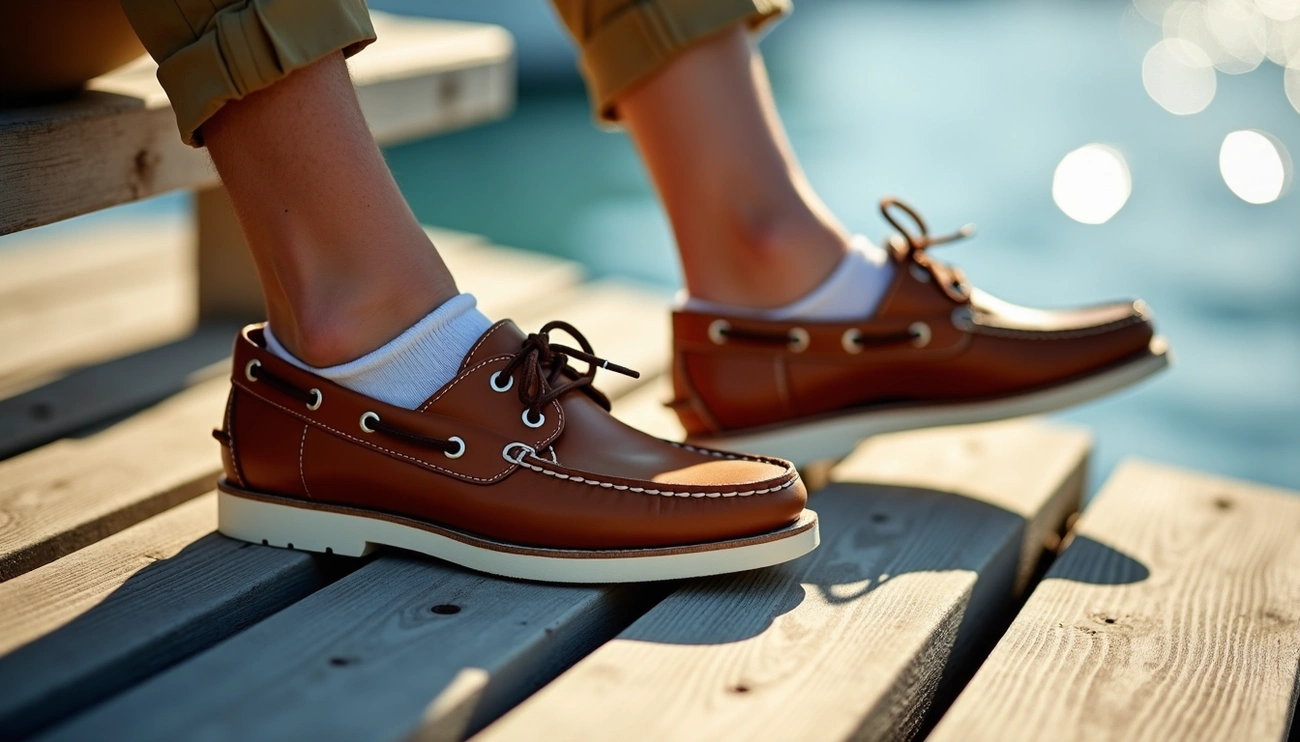
Crew socks pair naturally with sneakers, creating a relaxed look perfect for running errands or meeting friends. The combination works with jeans, shorts, or casual pants, offering all-day comfort without sacrificing style. Loafers become less formal when paired with visible crew socks, especially in solid colors or subtle patterns. This pairing has gained popularity in prep-inspired outfits, where the sock adds visual interest peeking above the shoe line.
Business Casual Workplaces
Business casual environments accept crew socks when you choose wisely. Solid colors like black, charcoal, or navy complement chinos and dress shoes while maintaining professional appearance. The key is matching your sock shade to either your trousers or shoes for visual continuity. Dark jeans with casual loafers benefit from subtle striped or textured crew socks, adding personality without crossing into overly casual territory. In particular, crew socks provide extra warmth during winter months while maintaining business-appropriate coverage.
Athletic and Active Wear
Athletic applications showcase crew socks at their best. The mid-calf height provides ankle support during basketball, hiking, and running, preventing blisters through strategic cushioning. Moisture-wicking crew socks made from performance fabrics handle sweat effectively, keeping feet dry during intense workouts. Athletes prefer crew socks on account of their coverage and cushioning during vigorous activity.
Weekend and Social Events
Weekend styling opens creative possibilities. Crew socks work with virtually every footwear style, from pumps and sandals to work boots and ballet flats. Fashion-forward combinations include crew socks with loafers and blazers for academic-inspired looks, or with athletic pieces like varsity sweaters for tennis-inspired casual outfits. The visible sock trend allows personal expression through patterns and colors during social gatherings where formal dress codes don’t apply.
When to Wear Dress Socks

Dress codes dictate when dress socks become non-negotiable. Certain environments and events demand the refined appearance only proper dress socks provide.
Formal Business Settings
Finance, law, and executive leadership roles operate under strict dress expectations. These conservative environments call for dark suits paired with equally conservative sock choices. Black, navy, or charcoal socks in solid colors maintain the clean, consistent appearance these fields require. Mid-calf or over-the-calf lengths prevent any skin exposure when seated. Note that bold patterns contradict the professional restraint these settings demand.
Weddings and Black-Tie Events
Black over-the-calf dress socks serve as the standard for formal celebrations. For tuxedo events, silk or silk-blend socks provide the correct texture and thickness elegant occasions require. Match your socks to either trousers or shoes for a streamlined look. Wedding party members benefit from seamless toes and cushioned soles, eliminating irritation during ceremonies and receptions that span hours.
Job Interviews and Professional Meetings
First impressions hinge on visible details. Black, navy, gray, or dark brown socks project professional competence. Match socks to your trousers rather than shoes. Mid-length or knee-high options ensure no skin shows when crossing legs. Avoid white athletic socks with dress shoes entirely.
Traditional Office Environments
Established corporate settings expect dress socks that complement suit trousers. The thin construction allows pants to drape smoothly as you move and cross legs. Black, navy, and charcoal remain appropriate daily choices, matching trouser colors for visual continuity.
Conclusion
The distinction between crew socks and dress socks matters more than most people realize. In effect, choosing the wrong type can undermine your entire outfit, whether you’re heading to a job interview or weekend brunch. Crew socks deliver versatility and comfort for casual settings, while dress socks provide the refined appearance formal occasions demand.
We’ve covered the construction differences, material choices, and specific scenarios for each type. Now you can confidently reach into your sock drawer knowing exactly which pair fits your day ahead. Match your socks to your setting, and you’ll project the right image every time.