
What to Look for in Compression Socks
Before the list, here’s what actually separates a good pair from a gimmick.
| Criterion | Why It Matters |
|---|---|
| Compression level (mmHg) | Determines how much pressure the sock applies and what it’s suited for – light daily wear versus medical therapy |
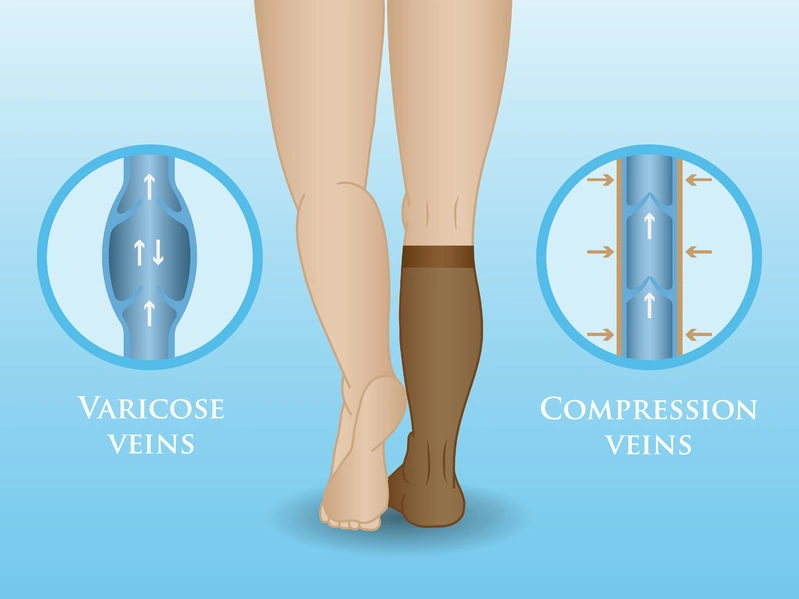
| Graduated compression | The pressure should be firmest at the ankle and gradually loosen toward the calf, which is how blood flow actually improves |
| Material | Nylon-spandex blends run firmer and more durable; merino wool and bamboo blends prioritize breathability and odor control |
| Sizing accuracy | Compression socks are sized by calf and ankle circumference, not just shoe size – a mismatched size undermines the compression |
| Intended use | Travel, running, nursing shifts, and medical recovery each call for a different compression range and height |
1. Bombas Everyday Compression Socks – Best Overall
Bombas earned Forbes Vetted’s top overall pick in 2026 for balancing comfort, effectiveness, and everyday versatility <cite index=”7-1″>across multiple sizes and colors, with moderate compression suited to daily wear</cite>.
Key features:
- 15-20 mmHg graduated compression, in the moderate range recommended for daily wear, travel, and light athletic recovery
- Available in multiple sizes and colorways rather than a single medical-looking option
- Designed for all-day comfort rather than intense athletic or medical use
Pricing: Mid-range (roughly $20-25 per pair) Best for: Anyone who wants one reliable pair for flights, workdays on their feet, or daily circulation support
2. Vim & Vigr High-Compression Socks – Best for Medical-Grade Support
Vim & Vigr’s 30-40 mmHg line delivers the highest pressure level covered in this guide, built specifically for more serious circulation issues rather than everyday comfort <cite index=”8-1″>and is designed to manage symptoms such as chronic venous insufficiency, persistent swelling, post-surgical recovery, and deep vein thrombosis</cite>.
Key features:
- 30-40 mmHg compression, at the top of the non-prescription range
- Cotton, nylon, and spandex construction for structured, consistent pressure
- Available in wide-calf sizing and is FSA/HSA eligible through Truemed
Pricing: Premium (typically $30-45 per pair) Best for: People managing a diagnosed circulation condition, under a doctor’s guidance
3. CEP Tall Running Compression Socks 4.0 – Best for Runners and Athletes
CEP’s running-specific socks sit in the moderate-to-firm compression range and are built around athletic performance rather than lifestyle wear. Forbes Vetted flagged them as a firm-compression option worth extra attention to daily wear time <cite index=”7-1″>since firm and extra-firm compression socks require more mindful, limited daily use than lighter options</cite>.
Key features:
- Firm graduated compression engineered for calf support during running and recovery
- Moisture-wicking performance fabric built for sweat and repeated washing
- Anatomically shaped for a running shoe fit rather than a flat dress-sock cut
Pricing: Premium (roughly $50-60 per pair) Best for: Runners who want compression during training and recovery, not just travel
4. Sockwell Lifestyle Firm Compression – Best Merino Wool Option
Sockwell blends merino wool into a graduated compression sock, trading a bit of medical precision for warmth and breathability <cite index=”11-1″>offering moderate graduated compression for lighter support needs, with a merino blend that helps with breathability, warmth, and odor control</cite>.
Key features:
- Merino wool blend for temperature regulation in cold climates or overnight flights
- Moderate graduated compression rather than firm medical-grade pressure
- Naturally odor-resistant material, useful for multi-day travel
Pricing: Mid-range (roughly $25-30 per pair) Best for: Cold-weather travelers or anyone who dislikes synthetic compression fabric against the skin
5. Physix Gear Compression Socks – Best Value
Physix Gear consistently shows up on best-of lists as a strong nylon-spandex option at a lower price point than premium medical brands, offering 20-30 mmHg compression suited to daily and light athletic use <cite index=”5-1″>though the cuffs can run a little tight while the feet fit looser than expected</cite>.
Key features:
- 20-30 mmHg compression, one tier above basic everyday socks
- Nylon-spandex blend built for durability over repeated wear and washing
- Widely available at a lower price than clinical or wool-based brands
Pricing: Budget-friendly (typically $12-18 per pair) Best for: First-time compression sock buyers who want firm support without a premium price
6. Comrad Compression Socks – Best for Style-Conscious Travelers
Comrad is one of the brands Consumer Reports tested directly against mainstream options like Bombas and Crazy Compression, positioning itself as a design-forward alternative to purely clinical-looking socks <cite index=”10-1″>in a category people typically consider after a long flight, drive, full day on their feet, or during pregnancy</cite>.
Key features:
- Fashion-forward patterns and colors distinct from typical medical-sock aesthetics
- Moderate graduated compression suited to travel and daily wear
- Knee-high construction designed to stay in place during long sit-heavy travel
Pricing: Mid-range (roughly $25-30 per pair) Best for: Travelers who want compression support that doesn’t look medical
7. SB SOX Graduated Compression Socks – Best Budget Multi-Pack
SB SOX is positioned as a lower-cost entry point into graduated compression, without the clinical fit depth of medical-first brands <cite index=”11-1″>offering budget-friendly graduated support for everyday use with standard sizing and lightweight, breathable construction</cite>.
Key features:
- Graduated compression at an accessible price point
- Standard sizing that covers most common calf and ankle measurements
- Frequently sold in multi-packs, useful for daily rotation
Pricing: Budget-friendly (often under $15 per pair when bought in multi-packs) Best for: Buyers who want several pairs on hand without the cost of medical-grade brands
Comparison Table: Compression Socks at a Glance
| Name | Best For | Compression Level | Price Range |
|---|---|---|---|
| Bombas Everyday | Overall daily use | 15-20 mmHg | Mid-range |
| Vim & Vigr High-Compression | Medical-grade support | 30-40 mmHg | Premium |
| CEP Tall Running 4.0 | Runners and athletes | Firm/moderate-firm | Premium |
| Sockwell Lifestyle Firm | Cold-weather comfort | Moderate | Mid-range |
| Physix Gear | Best value | 20-30 mmHg | Budget |
| Comrad | Style-conscious travel | Moderate | Mid-range |
| SB SOX | Budget multi-pack | Graduated (standard) | Budget |
Frequently Asked Questions
What compression level is best for flying?
Most travel guides recommend 15-20 mmHg for flights under six hours, since it eases swelling without restricting circulation over a long sitting period. Yahoo Health notes that lighter 8-15 mmHg options exist too, but they’re better suited to everyday comfort than meaningful swelling support on longer flights (Yahoo Health, 2026).
Are compression socks safe to wear all day?
Light to moderate compression (8-20 mmHg) is generally fine for all-day wear. Firm and extra-firm compression (20-30 mmHg and above) needs more mindful use, since it’s designed for shorter, targeted periods rather than continuous all-day wear (Forbes Vetted, 2026).
What’s the difference between graduated and anti-embolism compression socks?
Graduated compression socks are tightest at the ankle and gradually loosen toward the calf, and they’re the standard choice for casual and travel wear. Anti-embolism socks apply uniform pressure across the foot, ankle, and calf instead, and they’re typically used for bedridden patients before or after surgery under medical guidance (NBC Select, 2026).
Do compression socks actually improve circulation?
Compression socks apply external pressure to the lower leg, which supports blood flow back toward the heart and helps reduce swelling in the ankles and calves. They don’t reverse an underlying vein condition, but they do reduce symptoms like heaviness and swelling during long periods of standing or sitting.
How do I know what size compression sock to buy?
Compression socks are sized by calf and ankle circumference rather than shoe size. Most brands publish a sizing chart, and NBC Select points out that most compression socks use unisex sizing, so checking the brand’s own measurement chart matters more than picking based on gender or shoe size (NBC Select, 2026).
Can I wear compression socks if I have diabetes?
Some brands, including options reviewed by BestRatedDocs, specifically design fits for sensitive diabetic feet, but anyone with diabetes or a diagnosed circulation condition should check with a doctor before choosing a compression level, since incorrect pressure can restrict blood flow rather than help it (BestRatedDocs, 2026).
Final Verdict
For most people, the Bombas Everyday Compression Socks are the easiest recommendation – moderate 15-20 mmHg compression, comfortable for daily wear, and versatile enough for travel, work, or light recovery. If you’re managing a diagnosed circulation issue rather than general leg fatigue, Vim & Vigr’s 30-40 mmHg line is the stronger pick, though it’s worth discussing with a doctor first given how firm that compression level is.