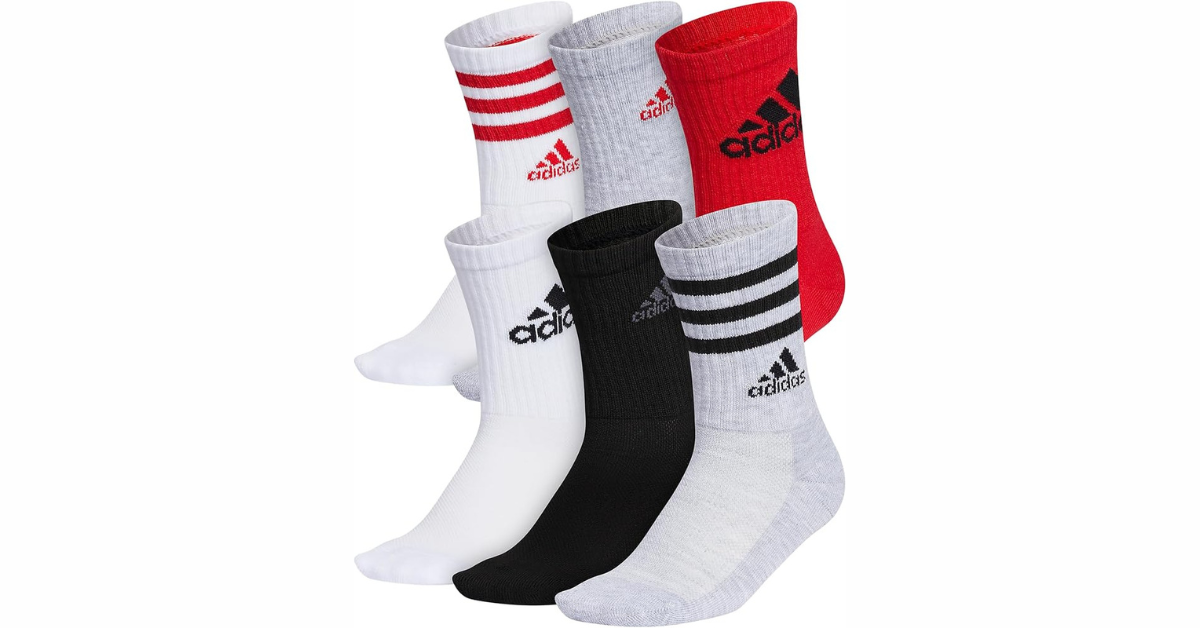
Adidas socks are made from a blend of cotton, polyester (often recycled), nylon, and elastane. The material ratios vary by sock type, including athletic, casual, and performance styles. This core blend delivers moisture-wicking, durability, cushioning, and arch support for comfort during daily wear and sports.
The Core Materials Used in Adidas Socks
Digging into the actual fabric composition of Adidas socks reveals a sophisticated engineering approach that balances comfort, durability, and performance. Each material serves a specific purpose in the overall design, creating socks that perform as hard as you do.
Polyester: Lightweight and moisture-wicking
Polyester stands as the dominant material in most Adidas athletic socks, comprising up to 97% of certain models. This synthetic fiber earns its place as the brand’s most-used material due to its exceptional performance properties. The Climalite construction in Adidas socks utilizes polyester to effectively wick moisture away from your skin, keeping your feet remarkably dry during intense activities.
Notably, Adidas has made significant sustainability strides with this material – in 2023, an impressive 99% of all polyester used in their products came from recycled content. The company employs recognized third-party standards like Global Recycled Standard (GRS) and Recycled Claim Standard (RCS) to verify the authenticity of these recycled materials.
Cotton: Soft but not always ideal for sports
Cotton appears in some Adidas sock lines, particularly those designed for everyday wear rather than high-performance activities. This natural fiber feels lovely against the skin and proves ideal for light workouts or casual use. However, cotton comes with significant drawbacks for serious athletic pursuits.
Unlike synthetic alternatives, cotton absorbs substantial moisture rather than wicking it away. Additionally, it tends to lose its shape more frequently and can feel coarser against the skin during extended wear. These properties create the perfect environment for blister formation and potential fungal growth – precisely why Adidas limits cotton content in their performance-oriented sock lines.
Nylon: Durable and stretch-friendly
Nylon contributes essential durability to Adidas socks. This resilient polymer excels at handling the constant pulling and stretching that occurs during athletic movements. Its remarkable resistance to wear and tear makes it particularly well-suited for sports socks that need to maintain their structure through countless training sessions.
Although nylon absorbs slightly more water compared to other synthetics, its exceptional durability compensates for this characteristic. Adidas strategically incorporates this material into areas requiring reinforcement, such as heels and toes, extending the lifespan of their socks.
Spandex: Adds flexibility and shape retention
Found in many Adidas sock formulations (typically around 3% of the composition), spandex provides the critical elasticity that helps socks maintain their shape throughout wear. Also known as elastane or Lycra, this stretchy material allows Adidas socks to hug your feet comfortably without becoming loose or baggy.
Spandex can withstand extreme tension and resistance, ensuring your socks return to their original shape after being stretched. This quality proves particularly valuable in compression-style socks or those with targeted support zones.
Other synthetics: Olefin, Polyamide, Profilen
Beyond the primary materials, Adidas incorporates specialized synthetic fibers that enhance specific performance aspects:
- Olefin: This synthetic helps moisture pass through the sock efficiently, complementing the wicking properties of polyester
- Polyamide: Added specifically to increase overall comfort levels in the sock
- Profilen: Known for its low friction coefficient, this specialized material helps prevent painful blisters during extended wear
Through precise blending of these materials, Adidas creates socks that deliver optimal performance for different activities and conditions. Each component contributes to the overall experience – from moisture management to durability to comfort.
Why Adidas Chooses These Materials
At the foundation of Adidas’ product philosophy lies a careful material selection process. For the brand, materials aren’t merely components—they fundamentally shape performance, quality, comfort, and environmental impact. This strategic approach extends to their sock line, where fabric choices reflect deliberate decisions about how athletes experience their products.
Balancing comfort and performance
Adidas consistently prioritizes the delicate balance between comfort and performance capabilities in their sock designs. For instance, their athletic crew socks feature 360 degrees of cushioning to deliver both superior comfort and extended durability. This attention to detail explains why many athletes answer “are Adidas socks good” with an enthusiastic yes.
The brand’s cushioning strategy is particularly noteworthy—placing padding strategically under the heel and ball of the foot for shock absorption without unnecessary bulk. This anatomical approach creates socks that feel comfortable while still enhancing athletic performance, making them ideal for everything from intense training sessions to everyday wear.
Moreover, Adidas implements arch compression technology across many sock models, providing a secure fit that supports the foot’s natural structure throughout movement. This design feature demonstrates how the brand thinks beyond basic material composition when determining what material are Adidas socks made of—considering how materials work together in structural harmony.
Durability for athletic use
Athletic socks face demanding conditions, from constant friction to repeated stretching. Adidas selects materials that withstand these challenges, which is why polyester and nylon feature so prominently in their compositions. Independent testing suggests Adidas socks often outlast comparable brands in terms of fiber resilience and resistance to pilling—especially in their cushioned training variants.
The durability advantage becomes apparent in what are Adidas socks made out of—primarily synthetic blends engineered for longevity. Their construction technique extends the product lifespan, offering athletes reliable performance through countless workouts. This reliability factor explains in part why the question “are Adidas socks cotton” typically gets answered with “not primarily”—cotton simply doesn’t offer the same durability profile.
Additionally, Adidas increasingly incorporates sustainability into their durability equation, utilizing recycled materials like Primegreen and Primeblue without compromising functional longevity. This approach represents an evolution in thinking about what makes athletic apparel truly durable—both in immediate performance and environmental impact.
Moisture control and breathability
Perhaps nowhere does material selection matter more than in moisture management. Adidas deliberately chooses fabrics that combat sweat accumulation—a critical consideration since moisture buildup creates the perfect conditions for discomfort, blisters, and potential fungal growth.
The brand’s signature Climalite construction exemplifies this priority, utilizing specific polyester blends designed to wick away moisture and keep feet consistently dry. This technology pulls sweat away from the skin, effectively transferring it to the outer surface where it can evaporate more easily.
Furthermore, breathability remains a constant consideration in Adidas sock design. Their materials allow sufficient airflow around the foot, preventing the hot, sticky sensation that can distract athletes during crucial moments. Advanced fabric technologies in newer sock models feature targeted mesh ventilation zones that maximize cooling where it’s most needed.
How Material Blends Affect Sock Performance
Material science serves as the hidden foundation of athletic sock performance. What are Adidas socks made of isn’t just about composition—it’s about how these materials work together to create specific performance benefits.
Impact on cushioning and support
The strategic blending of materials directly influences how Adidas socks cushion and support your feet. In their athletic crew socks, a special polyester blend creates 360 degrees of cushioning, providing exceptional comfort while maintaining durability during intense activities. This targeted approach places padding specifically in high-impact areas.
Consequently, the cushioned footbed helps protect the areas receiving the most stress during movement. This isn’t merely about comfort—it’s functional protection that prevents fatigue and injury. For hiking-specific models like the Terrex Cold.RDY socks, Adidas implements “half-cushioning,” placing padding only where needed along with anti-blister yarn in the toe area.
Additionally, many Adidas sock designs feature arch compression technology that provides a secure fit while actively supporting your hardworking feet. This architectural support element keeps the sock locked in place and provides midfoot stability throughout movement.
Effect on fit and compression
The precise ratio of synthetic fibers determines how well are Adidas socks good at maintaining their shape. Spandex (often 3-4% of the composition) adds crucial stretch that ensures a snug, comfortable fit that moves with your foot. Without this elastane component, socks would quickly lose their shape after washing.
Polyester and nylon, meanwhile, help the socks maintain structural integrity even after repeated washing. The compression fit through the arch adds targeted support precisely where feet need it most. This prevents the sock from bunching or sliding inside your shoe—a primary cause of blisters.
Indeed, many performance Adidas socks contain built-in arch support that simultaneously keeps the sock positioned correctly while reducing foot fatigue. The question of what material are Adidas socks made of becomes particularly relevant with compression models, where material elasticity directly impacts graduated pressure distribution.
Role in temperature regulation
The material blend in Adidas socks plays a crucial role in keeping feet at optimal temperature. Their technological innovations include:
- Climalite: Moisture-wicking construction that pulls sweat away from the skin
- Climacool: Temperature-regulating technology creating breathability for consistent comfort
- HEAT.RDY: Effective heat regulation that keeps feet cool and dry
For cold-weather activities, Adidas creates specialized blends like their Terrex Cold.RDY socks, featuring 18% wool with synthetic fibers for insulation while maintaining moisture management. Conversely, their ventilated mesh inserts in performance socks allow air circulation to prevent overheating.
What are Adidas crew socks made of matters profoundly when considering temperature regulation—synthetic fibers transport moisture away from skin while allowing proper ventilation, thereby preventing both excessive heat and uncomfortable dampness.
Are Adidas Socks Good? A Look at Quality and Comfort
When investing in athletic footwear, many people overlook the crucial role socks play in overall comfort. In fact, the average person spends about 13 years of their life on their feet, making the quality of sock support essential. So exactly how good are Adidas socks? Let’s examine what sets them apart.
What makes Adidas socks stand out
Adidas doesn’t treat socks as mere afterthoughts – they design them with specific technologies to enhance performance. Their signature Climalite construction effectively pulls sweat away from the skin, keeping feet dry throughout intense activities. This moisture-wicking capability prevents the distractions that come with sweaty feet.
Besides moisture management, Adidas incorporates cushioned footbeds in many sock models, providing targeted padding exactly where feet need it most. Their arch compression technology delivers a secure fit that actively supports hardworking feet. Generally, these design elements work together to reduce fatigue during extended wear.
User feedback and long-term wear
According to customer reviews, Adidas socks consistently earn praise for their comfort and durability. Many users report that their feet “feel supported and slightly cushioned” and note that “legs and feet don’t tire as easily” during workouts. Surprisingly, some even find the compression qualities comparable to medical-grade compression socks.
Regarding longevity, Adidas socks typically maintain their form and support through approximately 3-6 months of regular wear. Nevertheless, some users observe that while Adidas socks “feel really, really good initially,” they may wear out faster than certain competing brands.
Comparing Adidas to other brands
When placed alongside competitors, Adidas socks often stand out for their cushioning and durability. The Trefoil Crew Socks earned recognition from Wirecutter as “functional and stylish” with “squishy footbeds” and “light arch support”. Ultimately, they were described as “basically indestructible” after outperforming Nike Everyday Plus Cushioned socks in durability tests.
Despite these strengths, Adidas socks do have minor limitations. The synthetic materials may pill over time, and some users find the compression somewhat tight around the ankle and calf. Furthermore, while polyester excels at wicking away sweat, it isn’t quite as breathable as natural fibers.
What to Avoid: Misconceptions About Sock Materials
Many shoppers have false assumptions about sock materials that can lead to poor purchasing decisions. Let’s clear up some common misconceptions about what’s really in your Adidas socks.
Are Adidas socks cotton? Not always
Despite popular belief, Adidas offers various sock compositions for different purposes. While they do produce cotton socks for casual wear, their performance-oriented athletic socks typically contain limited cotton content. Most Adidas athletic socks primarily feature synthetic materials like polyester and nylon, with cotton playing a secondary role if present at all. This design choice prioritizes function over conventional wisdom.
Why 100% cotton may not be ideal
Pure cotton socks come with significant drawbacks for athletic activities. First, cotton absorbs moisture but doesn’t wick it away, keeping sweat trapped against your skin. This creates perfect conditions for blisters and fungal infections. Second, without synthetic reinforcement, 100% cotton socks wear out quickly at pressure points like heels and toes. Finally, cotton lacks elasticity, making such socks prone to sagging and losing their shape throughout the day.
How to read material labels correctly
Whenever examining sock labels, remember that materials listed first comprise the highest percentage of the composition. Furthermore, look beyond marketing terms like “cotton socks” – check the actual percentages. For athletic performance, seek blends containing substantial polyester or nylon with small amounts of spandex (2-5%) for stretch. This combination delivers superior moisture management and longevity.
Conclusion
Understanding what Adidas socks are made of reveals why they’ve earned their reputation among athletes and everyday wearers alike. The strategic blend of polyester, nylon, spandex, and other specialized synthetics clearly demonstrates Adidas’ commitment to performance-driven design. Therefore, when we consider the question “are Adidas socks good?” – the materials themselves provide a compelling answer.
The dominance of polyester (up to 97% in some models) delivers exceptional moisture management through technologies like Climalite, while nylon reinforces high-stress areas for lasting durability. Additionally, that small but mighty 3% spandex ensures your socks maintain their shape throughout intense activity. This thoughtful material selection process explains why cotton plays a limited role in performance models – it simply cannot deliver the same moisture control or resilience.