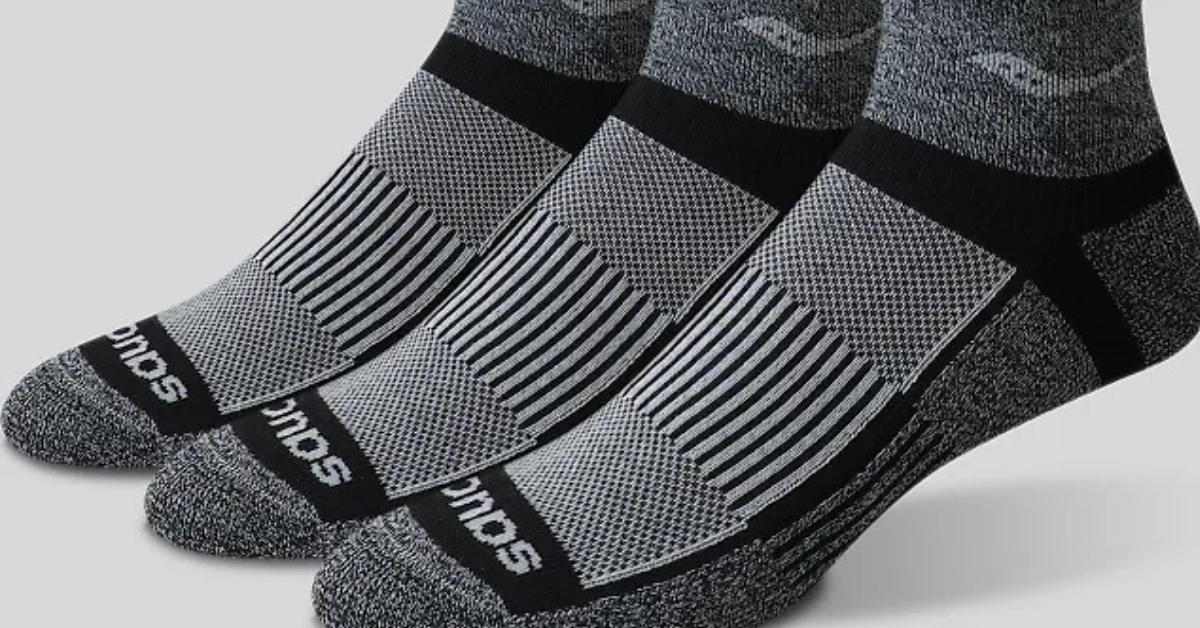
Saucony socks are made from moisture-wicking synthetic blends, including polyester, nylon, and spandex. Many styles use specialized yarns like Repreve recycled polyester and Sorbtek for sweat control, while some options include Merino wool. These materials improve breathability, arch support, and a secure running fit.
What materials are used in Saucony socks?
Looking at the composition of Saucony socks reveals a strategic blend of synthetic materials designed for performance. Most models contain a carefully engineered mix that prioritizes function over fashion, yet still delivers on both fronts.
Polyester, nylon, and spandex explained
Polyester dominates the material makeup of most Saucony running socks, typically comprising 51-88% of the total composition. This synthetic fiber serves as the foundation because it excels at moisture management—pulling sweat away from your skin to prevent blisters. Additionally, certain Saucony models incorporate specialized variations like Repreve polyester (made from recycled plastic bottles) at 26-33% of the composition.
Nylon appears in smaller amounts, generally 3-9%[41], providing exceptional durability in high-friction areas. Meanwhile, spandex (sometimes listed as Lycra) makes up just 2-4% of the material blend but plays a crucial role by delivering the stretch needed for a snug, no-slip fit.
Some premium Saucony socks also feature specialized materials like Sorbtek—a performance fiber that enhances moisture control—comprising 9-14% of certain models[41].
Role of cotton in select models
Despite the dominance of synthetic materials, Saucony does offer select models containing cotton. Nevertheless, pure cotton is generally avoided in performance running socks because it tends to retain moisture against the skin. When cotton appears in Saucony socks, it’s typically blended with synthetic fibers to balance softness with proper moisture management and durability.
Why synthetic blends dominate
Synthetic blends have become the gold standard for running socks due to several performance advantages:
- Superior moisture management: Unlike natural fibers that absorb and hold moisture, synthetic materials actively wick sweat away from the skin
- Enhanced durability: Polyester and nylon resist wear and tear from regular high-impact use
- Reduced friction: Seamless construction paired with synthetic materials minimizes blister-causing friction
The RunDry Pro moisture management system found in many Saucony models exemplifies this synthetic advantage—facilitating quick evaporation of sweat to keep feet dry and comfortable throughout runs. Furthermore, synthetic materials can be specifically engineered with desired properties like breathability, weight, and resistance to abrasion.
Eco-friendly innovations in Saucony socks
Beyond performance features, Saucony has stepped into the sustainable footwear arena with eco-conscious sock manufacturing. Their environmental commitment stands out especially in their newer product lines.
What is Repreve and how is it used?
Repreve forms the cornerstone of Saucony’s eco-friendly sock innovation. This specialized recycled fiber transforms plastic waste into performance materials for running gear. Created from post-consumer plastic bottles, Repreve delivers the moisture control and durability runners expect while reducing environmental impact. Within Saucony’s composition, Repreve polyester typically constitutes between 26-33% of certain sock models. The material retains critical performance qualities found in virgin polyester yet comes with significantly reduced resource consumption.
First introduced in their performance lines, Repreve now appears throughout multiple Saucony collections. The material integrates seamlessly with other components, allowing for the same technical benefits without compromising sustainability.
Are Saucony socks made from plastic bottles?
Yes—several Saucony sock lines directly incorporate recycled plastic bottles into their manufacturing process. The Inferno line showcases this commitment most visibly, with each 3-pack of quarter-length socks containing fibers made from up to two recycled plastic bottles. Similarly, the no-show tab versions in the same collection utilize up to one plastic bottle per pack, whereas the cushioned crew 3-packs incorporate up to 2.5 bottles.
Obviously, the amount varies by style and size. The Inferno collection, marketed with “Made with sustainability in mind”, represents Saucony’s most accessible eco-friendly sock option for everyday runners.
Sustainability goals and current progress
Saucony has established concrete sustainability targets as part of their long-term environmental strategy. Recently, the brand announced that by 2025, they aim to have 90% of their products contain organic, recycled, or renewable materials. This goal extends further, with plans to reach 100% preferred materials across their entire assortment by 2030.
To measure progress, Saucony has introduced their RFG (Run For Good) Standard—an internal benchmark that indicates whether products meet their sustainability criteria. Currently, their sock lines incorporating Repreve demonstrate tangible steps toward these larger objectives, though complete sustainability across all products remains a work in progress.
Performance features that matter
The technical excellence of Saucony socks comes from specific performance features that make them stand out among competitors. Each element serves a purpose in creating reliable running companions for athletes at every level.
Moisture-wicking and breathability
RunDry Pro moisture management forms the cornerstone of Saucony’s performance technology. This system utilizes ultra-soft wicking yarns that actively transport sweat away from your skin, keeping feet fresh throughout your workout. Consequently, your risk of developing uncomfortable blisters decreases dramatically.
Alongside moisture management, Saucony incorporates Airmesh venting—a specialized mesh construction that maximizes airflow around your feet. These strategic panels create continuous air circulation, maintaining optimal temperature even during intense training sessions. The combination of moisture control and ventilation works together to create a microclimate that keeps feet dry regardless of running conditions.
Cushioning and arch support
Saucony offers targeted cushioning that provides impact protection without adding unnecessary bulk. Their strategic approach places soft cushioning underfoot exactly where needed most—typically in the heel and ball of the foot. This thoughtful design absorbs shock while allowing for a natural feel inside your running shoes.
Moreover, engineered arch support represents another distinguishing feature. The compression arch technology delivers just enough support to maintain stability without feeling restrictive. This carefully calibrated compression prevents bunching and slippage during long runs.
Seamless construction for comfort
To eliminate irritation, Saucony incorporates seamless toe construction across their sock lineup. This design feature removes potential friction points that could lead to hotspots or blisters during extended wear. The absence of bulky seams creates a “second skin” sensation many runners prefer.
The Y-heel construction additionally secures the sock firmly in place, preventing the annoying bunching that can occur with lesser quality running socks.
Durability in high-stress zones
Lastly, Saucony reinforces their socks in areas prone to wear and tear. The heel and toe regions receive additional material thickness to withstand the constant friction against running shoes. This targeted reinforcement extends the lifespan of your socks without compromising comfort or flexibility.
The heel lock system furthermore enhances durability by minimizing movement within your shoes. By reducing friction between foot and shoe, this feature preserves both your socks and your feet on long-distance runs.
Specialty materials and seasonal options
For changing seasons and varied weather conditions, Saucony offers specialized sock options beyond their standard lineup. These seasonal variations employ unique materials to address specific environmental challenges.
When Saucony uses merino wool
While standard Saucony models rely on synthetic blends, their cold-weather options incorporate merino wool. The Inferno Wool collection typically contains 22% merino wool blended with 37% polyester, 22% acrylic, 17% nylon, and 2% spandex. This strategic combination delivers wool’s natural benefits without sacrificing synthetic fiber advantages.
Temperature regulation and odor control
Merino wool stands out for its natural temperature-regulating properties. Unlike purely synthetic fibers, merino wool offers:
- Natural wicking capabilities that function year-round
- Itch-free comfort even during extended wear
- Self-regulating warmth that adjusts to conditions
For odor management, Saucony employs X-Static XT2 technology in select models. This permanent anti-odor treatment uses pure silver to naturally inhibit bacteria growth, essentially eliminating the notorious “running sock smell” many athletes dread.
Best Saucony socks for cold weather
The Inferno Wool line represents Saucony’s premier cold-weather option. These socks excel in temperatures ranging from the 30s to below freezing. Notably, the Inferno Merino Wool Quarter socks provide excellent value for winter running with moderate cushioning that balances warmth and breathability. Essentially, they deliver enough insulation for cold days without overheating in milder conditions.
Conclusion
Saucony socks stand out as more than just standard running accessories. After exploring their composition, we can see they represent a thoughtful balance between performance engineering and environmental responsibility. Their synthetic blends of polyester, nylon, and spandex deliver the moisture management runners need, while innovations like Repreve demonstrate Saucony’s commitment to sustainability.
Throughout my research, the technical features truly impressed me. Seamless construction, strategic cushioning, and targeted arch support work together to create socks that perform reliably mile after mile. Additionally, specialized options like the merino wool blends provide solutions for year-round running conditions.