Toe socks can be better for foot health because they separate each toe, which reduces skin-on-skin friction and blister formation. Toe separation also improves moisture control and natural toe splay, which supports balance and alignment. Runners, hikers, and people with bunions or hammertoes often benefit most.
What Are Toe Socks and How Do They Work?
Toe socks go by several names: fingersocks, glove socks, 5-toe socks, or digital socks. The concept isn’t new. Japanese tabi socks, dating back to the 16th century, featured a split-toe design with two compartments for wearing with traditional sandals. Modern toe socks take this further by wrapping each toe individually in its own fabric sleeve.
The Design Behind Toe Socks
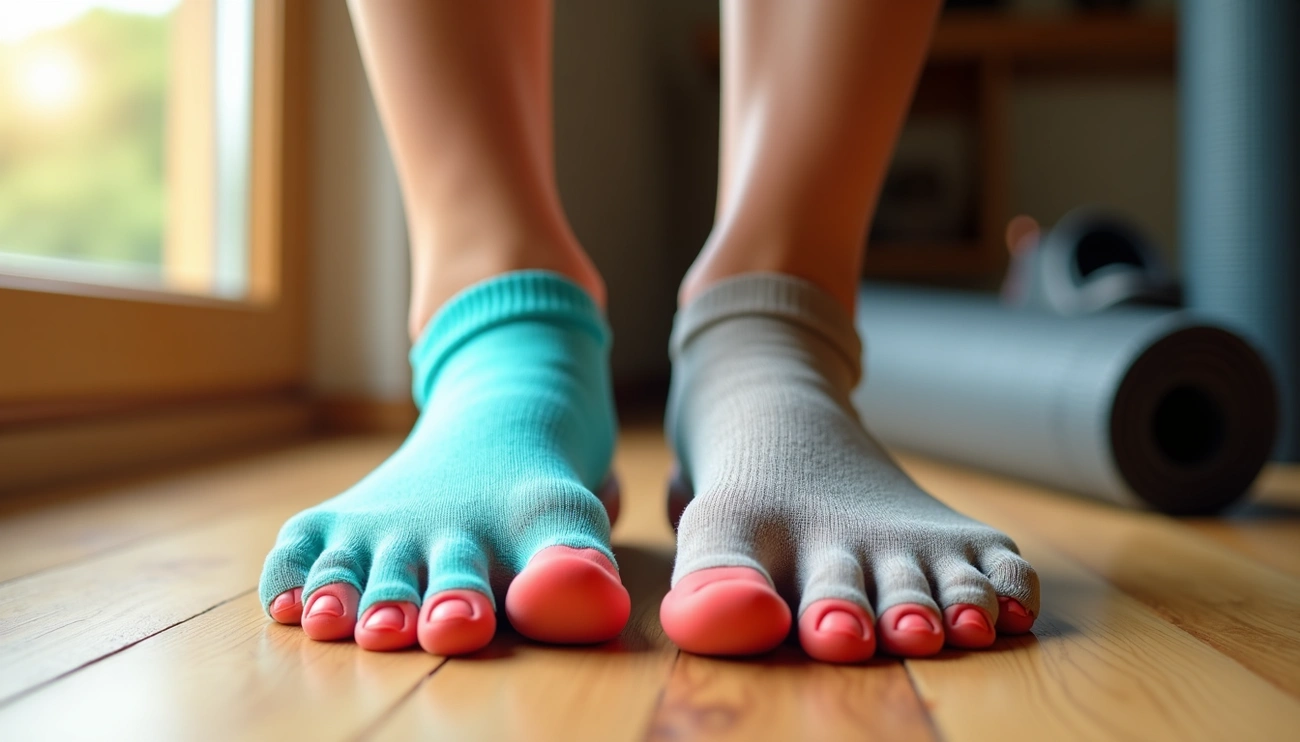
Think of toe socks as gloves for your feet. Each toe gets its own compartment, similar to how your fingers fit into individual sleeves of a glove. The design supports anatomical foot shape, contouring to the length and position of each toe.
You’ll find toe socks in every length imaginable. No-show styles work under sneakers, ankle versions suit casual wear, and knee-high options provide full coverage. Some come with rubberized undersides, functioning as an alternative to bare feet for yoga practice. Modern manufacturers design these socks specifically for comfort or athletic performance.
The anatomical fit sets quality toe socks apart from traditional cotton versions. Earlier toe sock designs used a one-size-fits-most approach, but current models are engineered to fit and move with your foot from heel to toe. This precision matters for runners, hikers, and anyone spending extended time on their feet.
How Toe Socks Differ from Regular Socks
Regular socks function like mittens, bundling all your toes into one shapeless pocket. This design compresses toes tightly together, causing them to fight for space inside the sock. When you wear conventional socks, your toes can’t function as individual units. Instead, they’re forced to work as a single compressed mass.
The compression affects more than comfort. Traditional socks soak up sweat and keep your feet constantly wet. Moisture accumulates between toes with nowhere to escape. The combination of limited space and excess moisture creates conditions for skin-on-skin friction.
Toe socks eliminate this problem by separating each toe. Your toes can spread naturally, just as they would barefoot. Each toe extends and moves independently, which changes how your foot functions during walking or running. The separation creates airflow channels between toes that conventional socks can’t provide.
Regular socks may also twist or slip during activity, bunching up and causing discomfort. Toe socks maintain a snug fit that stays in place, preventing the fabric migration that leads to hotspots and irritation.
The Real Benefits of Toe Socks for Your Feet
When you examine the benefits of toe socks, several stand out as measurable improvements over traditional sock designs. The question “do toe socks help your feet” gets answered through specific mechanical advantages.
Blister Prevention Through Reduced Friction
Wrapping each toe in moisture-wicking fabric creates a barrier that eliminates skin-on-skin friction. When your toes rub against each other, combined with heat and sweat, blisters and hotspots form. Toe socks prevent this by providing sock bulk between toes where usually there is none. The cushioning effect alone helps prevent blisters between toes and pinch blisters. Research from the 1990s showed thickness alone has a blister prevention effect.
Better Toe Alignment and Natural Movement
Properly aligning and naturally splaying your toes allows you to engage your entire foot and toes while running and exercising. Your big toe works alongside the plantar fascia to propel you forward and transfer energy at toe-off. When toes are compressed together, it creates a huge impediment to this natural movement. Toe socks don’t interfere with natural toe positioning and movement.
Improved Moisture Management
Toe socks integrate moisture-wicking materials into each design, efficiently absorbing and vaporizing sweat. COOLMAX technology wicks sweat away from skin to the fabric surface, where it evaporates quickly to keep wearers cool, dry and comfortable. Merino wool provides moisture wicking, odor resistance, breathability, soft feel, and temperature regulation.
Enhanced Breathability Between Toes
Your toes are designed to splay, not be squished together. When you can spread your toes unrestricted, you get better airflow. This helps prevent your feet from accumulating moisture and minimizes friction. The separation creates more airflow around your toes, keeping them cool and dry.
Full Foot Utilization and Balance
When your toes are separated, properly aligned and splayed, your weight distributes evenly. This allows your entire foot to be engaged in any athletic activity. Connecting your toes to the ground in good alignment and without restriction maintains balance and optimal control over your movement.
When Toe Socks Might Just Be a Gimmick
Despite the promised advantages, are toe socks better for your feet in every situation? Several limitations suggest they’re not the universal solution manufacturers claim.
Material Limitations and Synthetic Requirements
Creating functional toe socks requires synthetic materials like polyester and elastane to maintain elasticity and structural integrity. The complex construction of individual toe compartments demands materials that stretch and recover repeatedly without losing shape. Pure 100% cotton toe socks are not structurally feasible because cotton lacks the elastic properties needed to maintain the tight fit required around each individual toe.
Here’s the problem: synthetic materials can trap moisture, reduce breathability, and potentially cause skin irritation. These issues contradict the very foot health benefits that toe socks are supposed to provide. Manufacturing toe socks requires specialized machinery that many suppliers don’t currently possess.
Difficult Fit and Comfort Issues
Putting on toe socks can be time-consuming, and the effort required to work each toe into its individual pouch may feel like an inconvenience. They take up more room in your shoes due to the separation of each toe, which may call for different shoe sizing and fit. After a few thousand miles, holes formed after just four or five days where the base of toes met the ball of the foot, which led to blisters.
Higher Cost Without Clear Advantages
Toe socks for running are more costly than regular running socks because they require more fabric and have a more intricate design. Durability remains a point of continual concern.
Not Suitable for All Foot Types
When asked about toe socks, podiatrist Dr. Kevin Kirby expressed skepticism: “There’s no way it’s going to do that for all people”.
Who Should Actually Wear Toe Socks?
Specific user groups gain real advantages from toe socks, while others won’t notice much difference.
Runners and Long-Distance Hikers
Endurance athletes rely on toe socks for blister prevention during extended activity. At the 100-mile Western States Endurance Race, toe socks were the most common socks worn, with over 25% of athletes choosing them to reduce friction. Trail runners and ultra-marathoners stay blister-free for hours, even in wet or muddy conditions. Hikers appreciate how the design allows natural toe splay, increasing balance and stability similar to walking barefoot. Athletes completing grueling challenges, such as running 490 miles in just over 7 days, relied on toe socks to finish completely blister-free.
People with Chronic Blister Problems
Foot specialists suggest toe socks for people who experience frequent blisters, have overlapping toes, sweat excessively, or deal with bunions. Because bunions can cause the big toe to push against others, friction and blisters commonly occur. The fabric barrier between toes eliminates skin-on-skin contact that creates hotspots.
Yoga and Barefoot Shoe Enthusiasts
Yogis understand that spreading toes creates a broader foundation for balance. Toe socks with non-slip grip keep practitioners rooted to the ground without bunching or slipping. For those transitioning to barefoot shoes or embracing natural movement, toe socks are the next step in foot freedom. The combination promotes better posture, stronger foot muscles, and reduced long-term foot pain.
When Regular Socks Work Just Fine
Most healthy individuals with proper footwear won’t notice significant differences. If you don’t experience toe blisters or foot alignment issues, regular quality socks perform adequately for daily activities.
Conclusion
Toe socks deliver genuine benefits for endurance athletes, chronic blister sufferers, and barefoot movement enthusiasts. The separation design prevents friction, improves toe alignment, and enhances moisture management in these specific scenarios. For most people, however, regular quality socks work just fine for daily activities. Before investing in toe socks, consider your actual needs. If you’re logging serious miles or battling persistent blisters, they’re worth trying. Otherwise, you’re better off sticking with what already works for your feet.