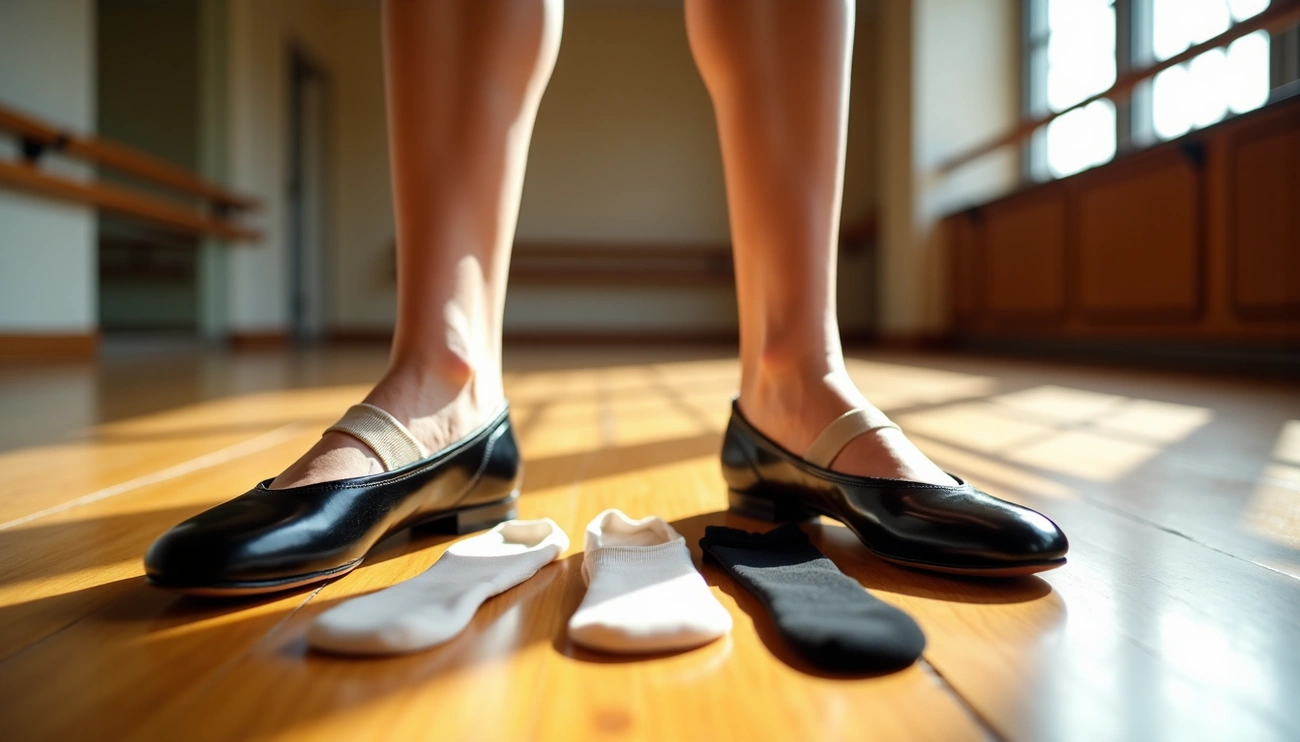
Wear socks with tap shoes based on comfort, fit, and shoe condition. Many dancers use thin or no-show socks to prevent blisters, reduce odor, and improve comfort. Use thick socks when breaking in new or tight tap shoes to stretch material and reduce pressure.
Understanding Tap Shoes and Footwear Basics

What Makes Tap Shoes Different
Tap shoes function as musical instruments, not just footwear. Each shoe features two metal taps: one positioned under the heel and another under the toes. These taps create the distinct sound that defines tap dancing, with the metal plates responsible for the depth and pitch you hear during performance. The quality of these taps varies significantly. Duo taps feature two metal plates that create a loud, crisp sound and remain popular among dancers, while supertone taps offer a softer sole and more relaxed fit.
Beyond the taps themselves, several components work together to produce sound and support movement. The heel, typically one or more inches high, is constructed from wood or stacked leather to provide stability. The toe box uses thick material to reinforce your toes and facilitate quick, powerful movements with the front of your feet. Meanwhile, the topline (the edge running along the shoe opening) affects ankle flexibility and stability depending on its height.
Why Footwear Choices Matter in Tap Dancing
When you’re deciding whether to wear socks with tap shoes, understanding how fit affects sound becomes crucial. A snug fit optimizes shock absorption, tap precision, and sound quality when dancing. Any slippage or excessive space weakens the energy transfer and affects the tap shoe sound. The taps need to make clean contact with the floor to produce clear, resonant tones.
Your footwear choices directly influence your technique. If your shoes are too large, the shoe curls upward, lifting the toe plate off the floor. This means you end up dancing on the sole rather than the metal plate.
How Tap Shoes Should Fit
Tap shoes should feel tighter rather than looser, as they will mold to your feet with continued wear. Your toes need to sit flat and near the end of the shoe, positioned directly over the toe plate for maximum precision. If the shoe hurts the sides of your feet, that signals the shoe is too narrow. Likewise, if your toes bend, curl, or overlap when wearing the shoe, you need a bigger size.
Therefore, when fitting tap shoes, consider what you’ll wear inside them. The snugness required means your choice about socks with tap shoes affects the overall fit and performance.
Pros and Cons of Wearing Socks With Tap Shoes

Benefits of Wearing Socks (Comfort, Hygiene, and Fit)
Socks create a soft cushioning layer inside your tap shoes that protects your skin from stiff interiors. This barrier reduces friction and prevents blisters, particularly helpful for beginners breaking in new shoes, dancers with sensitive skin, or anyone facing long rehearsals and workshops. The extra padding absorbs shock during jumps and turns while reducing foot fatigue.
Hygiene stands as another compelling reason to wear socks with tap shoes. Your feet sweat considerably during dance sessions, and socks absorb this moisture to keep your shoes cleaner. They reduce odor buildup and help prevent fungal infections that thrive in damp environments. Additionally, if your tap shoes feel slightly loose, socks fill the extra space to create a snugger fit and better control. During winter, socks add warmth since stiff leather tap shoes offer minimal insulation on cold studio floors.
Drawbacks of Wearing Socks (Grip, Sound Quality, and Feel)
Socks create a barrier that blocks tactile feedback, the sensation helping you sense each step and floor connection. Some dancers need this direct feeling to execute tricky rhythms and movements precisely. Furthermore, socks increase slippage risk inside the shoe, particularly thick or slippery materials that cause your foot to slide and disrupt balance and timing.
Sound quality can suffer as well. Socks change how your feet contact the shoe interior, potentially affecting the sharpness of your taps. Socks may also reduce grip during intricate footwork, retain heat causing overheating, and bunch up from thick seams creating distracting discomfort.
When Socks Help Your Performance
Socks boost performance when you’re breaking in new shoes, managing sensitive feet, or dancing through extended practice sessions where blister prevention matters most.
When Socks Hurt Your Performance
Correspondingly, socks hinder performance when you need maximum tactile connection for complex rhythms or when sound clarity becomes critical during performances where every tap counts.
Alternatives to Traditional Socks

Do You Wear Tights or Socks With Tap Shoes
Tights and dance stockings offer a seamless alternative that prevents bunching inside your shoes. They provide a snug fit, reduce friction to minimize blister risk, and absorb sweat effectively during extended sessions. Lightweight, breathable materials maintain foot comfort, while some tights feature reinforced toe or heel areas for added durability. These options work particularly well if you’re adjusting to tighter-fitting shoes or need a polished look for performances.
Dance Stockings and Performance Hosiery
Dance stockings deliver smooth, seamless coverage that eliminates the bulk of traditional socks. They wick moisture away while maintaining that close-to-barefoot sensation many dancers prefer.
Going Barefoot Inside Tap Shoes
Dancing barefoot creates direct contact with the shoe interior, improving grip and control during intricate footwork. This eliminates fabric slipping and enhances precision. However, shoes lacking padded insoles may cause discomfort during long sessions. You’ll need to ensure the interior stays smooth, well-fitted, and clean to avoid irritation.
What Kind of Socks Do You Wear With Tap Shoes
Thin socks work best since tap shoes require snug fitting. No-show socks remain popular for their invisible appearance, though some dancers find they fall off inside shoes. Dance peds cover only your toes and ball of foot, offering protection while maintaining shoe feel. Equally, compression socks support blood circulation during extended dance sessions.
Making the Right Decision for Your Tap Dancing
What Professional Tap Dancers Recommend
Professional consensus varies based on context. Expert dancers often skip socks to gain better control over their movements. For shows, many professionals go barefoot inside their tap shoes because this produces clearer sound and helps with precise steps[202]. On the other hand, these same dancers wear socks during extended practice sessions to prevent discomfort[202].
Tony Award-winning choreographer Savion Glover swears by going sockless, citing improved precision and control over taps as the primary reason. This preference stems from the ability to better feel the taps and make necessary adjustments for flawless performance.
Factors to Consider Based on Your Skill Level
Kids typically wear socks for hygiene purposes[202]. Beginners benefit from socks during initial learning phases. Advanced dancers, however, often dance without socks because they need enhanced control for complex footwork[202].
Personal Comfort vs Technical Control
Personal preference plays a significant role. Some dancers prioritize warmth and foot security, particularly those recovering from foot injuries. Others value the direct floor connection that sockless dancing provides.
Testing Different Options During Practice
Experiment during rehearsals before performances. Try different sock thicknesses, test dance stockings, and practice barefoot sessions. This hands-on approach reveals what works best for your feet and dance style.
Conclusion
The sock-or-no-sock debate ultimately comes down to your personal needs and dancing context. While socks offer comfort and hygiene benefits, going barefoot enhances control and sound quality. Notably, even professional dancers switch between both approaches depending on whether they’re practicing or performing.
I recommend experimenting with different options during rehearsals. Try thin socks, dance stockings, and barefoot sessions to discover what feels right for your feet. Your comfort and performance quality matter equally, so find the balance that works best for you.