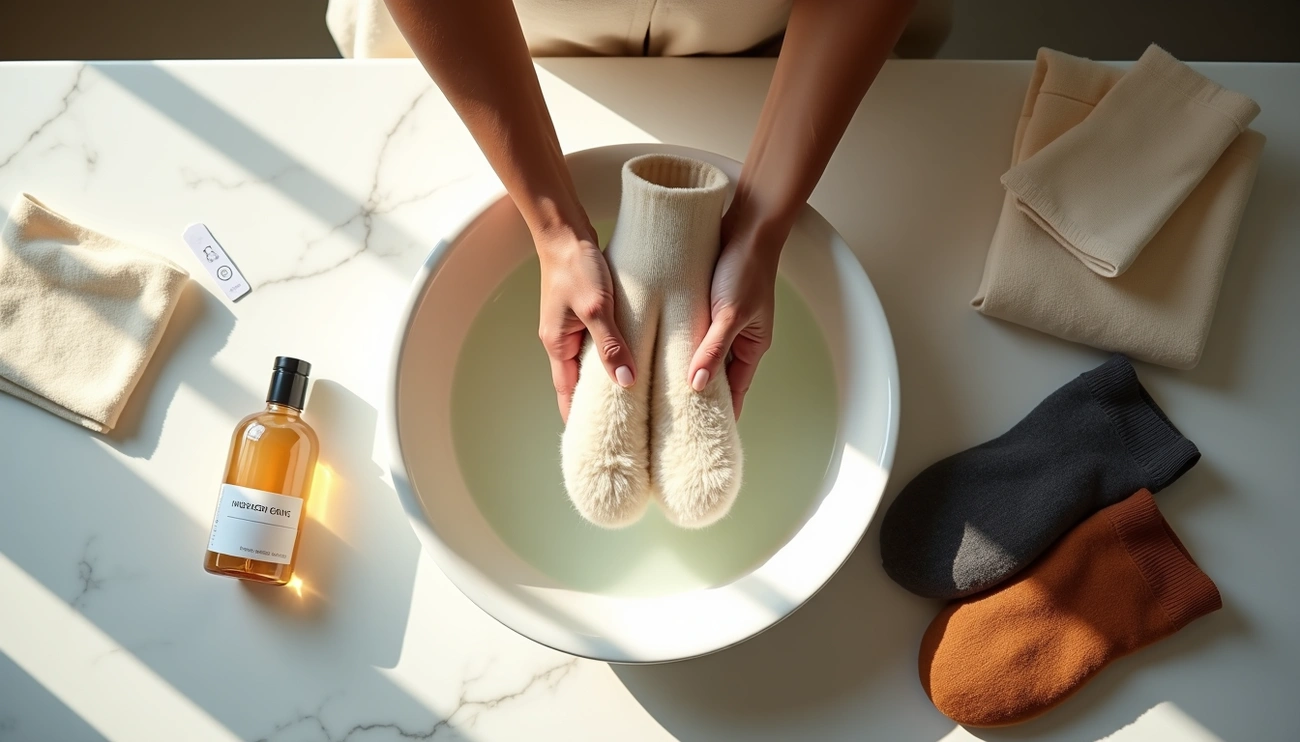
Wash alpaca socks by hand in cool water using mild soap or wool wash. Soak socks for 20–30 minutes without scrubbing. Gently squeeze out water, rinse thoroughly, and lay flat to dry. Avoid wringing, bleach, and hot water to maintain softness, warmth, and durability.
Preparing Your Alpaca Socks for Washing
Preparation makes the difference between alpaca socks that last for years and ones that lose their shape after a few washes. Before your socks touch water, take three steps that protect the delicate fibers and maintain their natural properties.
Check the Care Label First
Start by examining the care label attached to your alpaca socks. Manufacturers provide specific instructions based on the fiber blend and construction of each pair. Some socks contain pure alpaca wool and require hand washing only, while others blend alpaca with synthetic fibers that tolerate machine washing.
Alpaca is a natural fiber that can be damaged by hot water, high heat drying, harsh detergents, or aggressive washing methods. The care label tells you which techniques work best for your specific socks. In view of these variables, defer to whatever instructions appear more stringent than general guidelines.
Turn Socks Inside Out
Flipping your alpaca socks inside out protects the exterior surface from friction during the wash cycle. This small step reduces pilling and helps maintain patterns and colors. Washing inside out keeps your socks looking newer for longer.
The interior of socks comes into direct contact with dirt and sweat. Turning them inside out allows detergent to attack odors directly, providing a more thorough clean. Furthermore, this technique shifts most wear and tear to the inner side, leaving the outer knit less affected by the constant rubbing that occurs when socks tumble against the drum and other clothing.
Essentially, you’re protecting the visible portion of your socks from unnecessary damage. This becomes especially important when washing alpaca wool socks alongside items with zippers, buttons, or rough fabrics like denim.
Use a Mesh Laundry Bag
Place your prepared socks in a mesh laundry bag before washing. This affordable accessory provides an extra layer of protection that minimizes friction and prevents socks from snagging or tangling with other items.
A mesh bag serves multiple purposes. The fabric allows water and detergent to flow through while the zipper enclosure keeps socks contained and protected. This keeps delicate fibers intact and helps maintain the socks’ shape. In addition, you’ll never lose socks in the wash again since they stay together in one place.
The coarse mesh structure permits adequate water flow for cleaning while shielding your alpaca socks from aggressive agitation. For added organization, separate dark and light-colored socks into different bags to prevent dye transfer.
How to Wash Alpaca Socks

Two washing methods work for alpaca socks: hand washing and machine washing. Both preserve the fiber’s natural properties when done correctly.
Hand Washing Method
Fill a clean basin with cool water, keeping the temperature at or below 86°F (30°C). Add a small amount of wool-specific detergent and mix thoroughly. Submerge your socks and let them soak for 5 to 10 minutes. Press the socks gently through the water to clean without stretching or wringing. Rinse under cool running water until all detergent is removed. Press the socks against the sink or between towels to remove excess water without twisting. Never scrub, rub the socks together, or use a brush.
Machine Washing Steps
Select the wool or delicate cycle on your washing machine with cold water and a low spin speed. The delicate cycle mimics hand washing by using slow, gentle rotations. Avoid washing alpaca socks with heavy items like towels, sweatshirts, or jeans that could cause friction. Remove socks promptly once the cycle ends.
Choosing the Right Detergent
Use a wool-specific detergent that is free from harsh chemicals and enzymes. Regular detergents can be too aggressive, stripping natural oils from the wool and causing fibers to become brittle. Overuse of detergent can leave residue that is difficult to rinse out, leading to stiffness and reduced softness. Never use chlorine bleach. Fabric softener can be used sparingly, though excessive amounts can lead to pill formation.
Water Temperature Guidelines
Cold or lukewarm water works best for washing alpaca wool socks. Hot water causes fibers to shrink and lose their shape. Keep water temperature at a maximum of 85°F (27°C).
Common Washing Mistakes to Avoid
Hot water and harsh detergents cause shrinking and felting. Vigorous agitation leads to loss of softness. Wringing or twisting socks when wet can distort their shape permanently.
Drying Your Alpaca Socks Properly

Drying Your Alpaca Socks Properly
The drying phase determines whether your socks maintain their shape and softness or become distorted and damaged. Alpaca fibers become fragile when wet, requiring careful handling throughout the drying process.
Air Drying Method
Never wring or twist your freshly washed alpaca socks. Instead, gently press out excess water by rolling the socks in a clean, dry towel. Lay the socks flat on a dry towel or mesh drying rack in a well-ventilated area. Position them away from direct sunlight and heat sources like radiators or heaters, which can cause fading and weaken the fibers. Given that alpaca wicks water rather than absorbing it, your socks will dry completely overnight.
Reshaping While Damp
While the socks are still damp, carefully reshape them to their original form. Smooth out any wrinkles and ensure the heel and toe areas are properly aligned. This prevents permanent misshaping and maintains the socks’ fit.
Drying Methods to Avoid
Several drying methods will damage alpaca wool socks:
- Tumble dryers: Heat and agitation cause shrinking and felting, even on low settings
- Hanging to dry: Weight of wet material stretches fibers out of shape
- Direct heat or sunlight: High temperatures make fibers brittle and prone to breaking
Storing and Maintaining Your Alpaca Socks

Proper storage extends the lifespan of your alpaca socks and protects them from damage during periods of non-use.
Best Storage Practices
Store your socks completely dry in a cool location with good air circulation. Use breathable containers like cotton bags, pillowcases, or fabric storage bags rather than plastic, which traps moisture and causes mildew. Store socks flat instead of rolling them tightly, as rolling stretches fibers and elastic over time.
Protecting Against Moths and Insects
Moths pose the greatest threat to alpaca wool[341]. Place cedar chips or lavender sachets in storage areas as natural deterrents[341][242]. Avoid direct contact between cedar and socks, as cedar oil causes discoloration. For long-term protection, freeze socks in a sealed bag for 24 hours to kill insect larvae.
Removing Pills Safely
Use a sweater comb, gently gliding it in one direction across pilled areas. Never pull pills by hand or use scissors, which damages fibers[291].
How Often to Wash Alpaca Socks
Wash after two to three wears unless visibly soiled. Daily wear requires weekly or bi-weekly washing, while occasional use needs only monthly washing.
Treating Stains on Alpaca Wool
Act immediately when stains occur. Blot gently with a paper towel, then rinse under cold running water. Use diluted detergent or white vinegar for spot cleaning[253]. Never rub or use chlorine bleach.
Conclusion
You now have everything you need to keep your alpaca socks soft, warm, and long-lasting. Indeed, washing them properly isn’t complicated once you understand the basics: cool water, gentle detergent, and flat drying away from heat.
By following these simple steps and avoiding common mistakes, your alpaca socks will maintain their luxurious feel and durability for years. Take care of them properly, and they’ll continue providing unmatched comfort wear after wear.