Size hockey socks by matching them to shin guard length, not player height. Youth players typically wear 18–22 inch socks, juniors 22–24 inches, intermediates 26–28 inches, and seniors 28–32 inches. Proper hockey sock sizing fully covers the shin guards and attaches to a Velcro jock or garter belt with slight extra length.
Understanding Hockey Sock Sizing Basics
Hockey socks serve a specific purpose that sets them apart from any other athletic wear. These ankle-to-thigh garments fit over your protective gear and function as both a uniform component and a securing mechanism for shin guards. They’re form-fitting by design, traditionally crafted from cotton or synthetic rib-knit fabric.
What Makes Hockey Socks Different
You’ll find hockey socks attach to your equipment through either a garter belt or Velcro tabs on your undershorts. Players typically tuck their socks inside the upper ankle area of their skates, with athletic tape wrapped below the knee to hold everything in place.
The construction differs between two main types. Knit hockey socks offer a traditional sweater-like weave that stretches easily over shin guards but can develop holes from gameplay. In contrast, mesh polyester socks provide a snug, pro-like fit with moisture management and enhanced breathability. Mesh versions include Velcro tabs for more secure attachment to your jock’s corresponding tabs.
Performance socks have minimal stretch and don’t shrink in the wash, which means they fit wider to accommodate various shin pad and leg widths. Knit socks are more forgiving, stretching an extra few inches, but they can shrink if washed in warm water and thrown in the dryer.
Hockey Sock Size Chart Overview
Hockey sock sizing follows a straightforward measurement system that corresponds to your leg length and shin guard size. The ranges span from youth to senior levels:
| Level | Sock Size | Shin Guard Size | Player Height |
|---|---|---|---|
| Youth | 18″ – 22″ | 7″ – 9″ | 3’2″ – 4’6″ |
| Junior | 22″ – 24″ | 10″ – 12″ | 4’2″ – 5’3″ |
| Intermediate | 26″ – 28″ | 13″ – 14″ | 5’4″ – 5’10” |
| Senior | 28″ – 30″ | 15″ – 17″ | 5’9″ – 6’5″ |
For adult male players, 28″-30″ are the two most common sizes. Senior sizing often breaks down further into Small (26″-27″), Medium (27″-28″), Large (28″-30″), and Extra Large (31″-32″), all accommodating shin guard sizes of 15″-17″.
Youth vs Adult Sizing Differences
The gap between youth and adult sizing extends beyond simple measurements. Youth socks in the 18″-22″ range work with smaller 7″-9″ shin guards for players under 4’6″ tall. As players grow into junior sizing at 22″-24″, they’re typically between 4’2″ and 5’3″ with 10″-12″ shin guards.
Adult sizing starts at the intermediate level with 26″-28″ socks for players 5’4″ to 5’10”. Senior sizes then accommodate taller players from 5’9″ to 6’5″, with the extra length needed for larger 15″-17″ shin guards.
Size labels can be inconsistent across brands, so focusing on the actual measurement provides better results than relying on Small, Medium, or Large designations. The measurement represents the literal length of the sock from bottom to top.
How to Measure for Hockey Socks
Taking accurate measurements at home eliminates guesswork when selecting hockey socks. The process takes less than two minutes and requires minimal equipment.
Step 1: Gather Your Measurement Tools
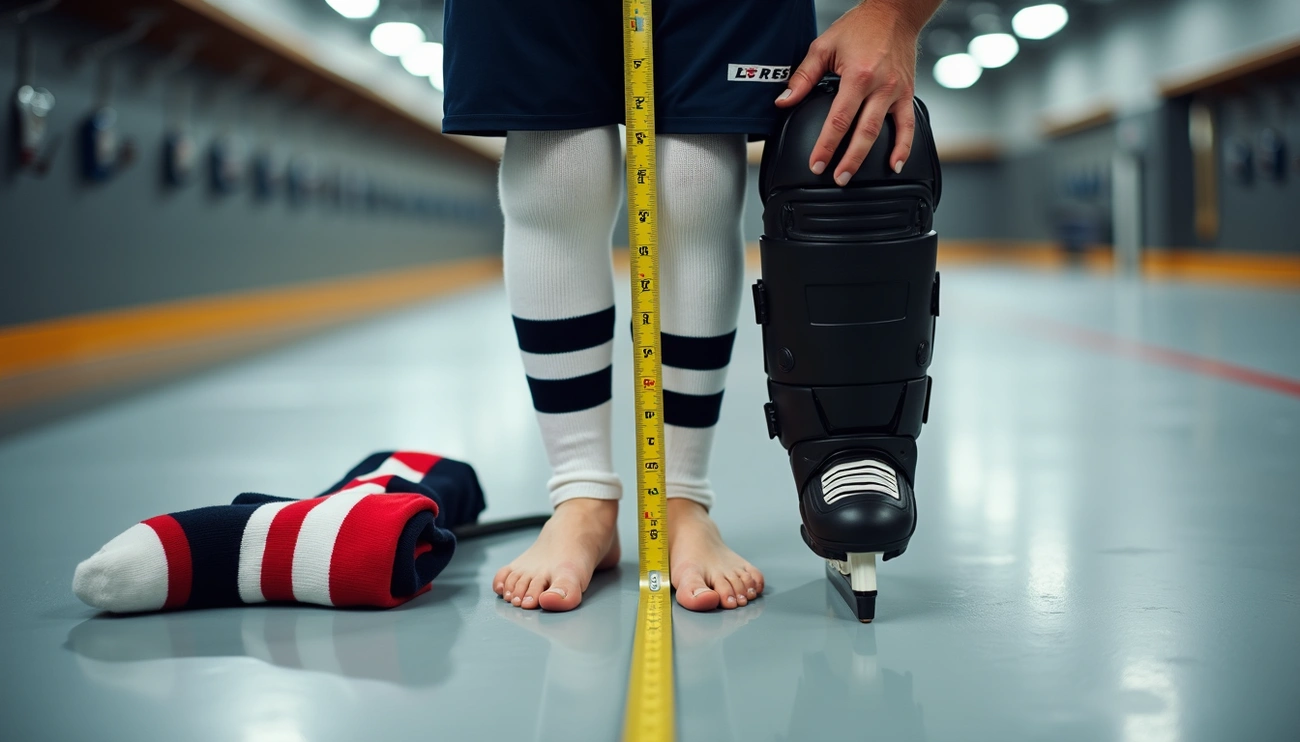
You need just two items: a fabric measuring tape or standard tape measure, and a flat surface to stand on. Remove your shoes before starting, as footwear throws off the accuracy of your leg measurement. Standing barefoot on a level floor gives you the baseline point for measuring.
Some players prefer measuring with shin guards already on since hockey socks are designed to cover this protective gear. This approach accounts for the added bulk and provides a more realistic measurement of how much length you’ll need. However, measuring without shin guards works equally well for most sizing purposes.
Step 2: Measure from Ground to Mid-Thigh
Stand straight with your weight evenly distributed. Position the end of your measuring tape flat against the ground. Extend the tape upward along the outside of your leg to the middle of your thigh[51][71]. This halfway point on your thigh marks where your hockey sock should reach to provide proper coverage over shin guards while allowing secure attachment to your shorts or garter belt.
The measurement captures the full length from ankle to thigh that your sock must span. Keep the tape taut but not pulled tight during measurement. An alternative method involves measuring from your ankle bone to the middle of your thigh, which yields similar results since you’ll be wearing skates that cover the ankle-to-ground portion.
Your sock needs to cover your shin pad completely and extend a little above the knee. Measuring to mid-thigh accounts for this coverage requirement.
Step 3: Match Your Measurement to Size Chart
Take your measurement in inches and compare it against the sock size column in a hockey sock size chart. For instance, if you measure 23 inches from ground to mid-thigh, you fall into the junior range of 22″-24″. Similarly, a 27-inch measurement places you in the intermediate category at 26″-28″.
Different brands may have slight variations in their sizing increments. Some manufacturers offer socks in 2-inch increments while others use 4-inch ranges. Consulting the specific brand’s chart ensures the best match, though the general sizing guidelines provide reliable direction for most purchases.
Step 4: Round Up for Comfort
When your measurement falls between two sizes, round up to the nearest inch for a comfortable fit[51][61]. This practice prevents socks that are too tight or short. For example, if you measure 21.5 inches, round up to 22 inches when selecting your size.
Rounding up accommodates the natural movement and stretching that occurs during gameplay. Hockey socks need to stay in place without restricting your mobility or cutting off circulation. The extra room from rounding up also accounts for any shrinkage in knit socks if they’re washed in warm water.
Hockey Sock Size Chart for All Age Groups
Breaking down hockey sock sizing by age group reveals specific measurements that match each player’s development stage. Each category addresses distinct physical requirements and equipment compatibility.
Youth Hockey Sock Size Chart
Youth hockey socks range from 18″ to 22″ in length. These socks accommodate shin guards measuring 7″ to 9″ and work for players standing between 3’2″ and 4’6″ tall. The youth category serves the youngest players on the ice, from first-time skaters through players reaching early elementary school age.
Some brands offer more specific youth breakdowns. For instance, certain manufacturers provide 20″ socks for players 3’4″ to 4’0″ tall with 20-23″ waist measurements. Similarly, 24″ options accommodate slightly taller youth players from 4’0″ to 4’6″. Brand-specific sizing charts may also show youth Small/Medium at 21″ for 9″-10″ shin pads and youth Large/Extra Large at 24″ for 11″-13″ shin guards.
Junior Hockey Sock Sizing
Junior sizing spans 22″ to 24″. This range pairs with 10″ to 12″ shin guards for players measuring 4’2″ to 5’3″ in height. Junior socks bridge the gap between youth and adult sizing, serving players in middle school or early high school who’ve outgrown youth equipment but aren’t yet ready for full adult gear.
The 24″ measurement appears frequently across different brand offerings. Players wearing 13″ shin pads typically fit comfortably in this junior range. The consistent sizing across manufacturers makes junior socks one of the more standardized categories.
Intermediate Hockey Sock Sizing
Intermediate socks measure 26″ to 28″. These accommodate 13″ to 14″ shin guards for players standing 5’4″ to 5’10”. The intermediate level serves high school players and some adults who fall into this height range but don’t require full senior sizing.
Brand variations show 27″ as a common intermediate measurement. This middle ground between junior and senior sizing provides options for players experiencing growth spurts or those who prefer a tighter fit than standard senior socks offer.
Senior Hockey Sock Sizing
Senior hockey socks present the widest range of options. The general senior category runs 28″ to 30″, fitting 15″ to 17″ shin guards for players 5’9″ to 6’5″ tall. However, senior sizing breaks down further into multiple subcategories.
Senior Small measures 26″ to 27″. Senior Medium spans 27″ to 28″. Senior Large covers 28″ to 30″. Senior Extra Large extends from 31″ to 32″. All these senior variations accommodate the same 15″ to 17″ shin guard range.
The 28″-30″ measurements represent the two most common sizes for male adult players. This popularity stems from the average height distribution among adult hockey players. Senior socks at 30″ specifically are widely available across brands.
Brand sizing increments vary. Some manufacturers produce socks in 2″ increments while others use 4″ ranges. Performance socks from certain brands come in 21″, 25″, 30″, and 30″ extra wide options, while their knit versions are available in 22″, 26″, and 32″. These variations mean checking brand-specific charts yields better results than assuming universal sizing.
How to Check if Your Hockey Socks Fit Properly
Once you’ve selected a size based on measurements, verifying the actual fit with your equipment confirms whether you chose correctly. The difference between a properly sized sock and one that’s off by even a single size becomes apparent when you put everything together.
Signs of a Proper Fit
A properly fitted hockey sock feels snug and secure without bunching, slipping, or rubbing. When you pull the sock over your shin guard, it should slide on without difficulty but still maintain enough tension to hold everything in place during gameplay. The sock must cover your entire shin guard and provide extra material above your knee for secure attachment to Velcro jock tabs or your garter belt.
Movement remains unrestricted with the right size. You should move your knees and ankles normally, just as you would on the ice. The sock extends past your highest shin guard and covers your entire ankle. No gaps appear between the bottom of your shin guard and the top of your skate.
Common Problems with Incorrect Sizing
Oversized socks create excess material that fails to secure shin guards properly. The fabric looks loose and baggy rather than form-fitting. This surplus material bunches at the knee or ankle, creating uncomfortable pressure points and an unprofessional appearance.
Undersized socks present the opposite challenge. You’ll struggle to pull them over your shin guards, or they won’t fit at all. Forcing tight socks over equipment increases the likelihood of rips and tears in the fabric. Even if you manage to get them on, socks that are too short leave portions of your shin guard exposed.
Testing the Fit with Shin Guards On
Start by putting on your hockey jock or garter belt, followed by your shin guards. Place your foot through the top opening of the hockey sock and pull it over your shin guard. The hem of the sock should sit flush with the bottom of your shin guard.
Check the length by standing in your normal skating stance. The sock should reach mid-thigh with adequate material for attachment. Bend your knees and move through skating motions. Restricted movement signals a size too small, while excessive sliding indicates you need to size down.
Smooth out any wrinkles against your shin guards. The fabric should conform to the shape of your protective equipment without creating tight bands around your calf or knee.
Tips for Choosing the Right Hockey Sock Size
Selecting the right hockey sock size involves more than matching measurements to a chart. Several factors influence which size works best for your specific situation.
Consider Your Shin Guard Size
Shin guard dimensions should drive your sock selection, not your height or shoe size. This approach provides the most reliable sizing method. Measure the distance from the bottom of your shin guard at the ankle to the top just below the knee. Players of similar height often use different shin guard sizes depending on positioning, comfort, or brand preference. Consequently, two players standing 5’6″ might need different sock lengths based on their actual shin guard measurements rather than their identical heights.
Account for Growth in Youth Players
Young players experience rapid growth spurts that can make equipment obsolete within a season. Sizing up one increment accommodates this development without creating an immediate fit problem. For instance, a youth player measuring exactly at the 22″ mark might benefit from junior 22″-24″ socks instead of youth 18″-22″, allowing room for the next growth phase.
When to Size Up vs Size Down
Borderline measurements require judgment calls based on sock material. Round up for knit socks since they stretch to accommodate shin guards. In contrast, mesh or sublimated socks need sizing that matches calf circumference to prevent restriction or shape loss. Knit socks shrink 2-3% after initial washing, while mesh and sublimated versions shrink only 0.5%. Factoring in this shrinkage during selection prevents socks that become too short after laundering. When uncertain, sizing too big beats sizing too small, as tape can secure excess length.
Pro Stock Sock Sizing Considerations
Pro stock socks typically lack velcro tabs. Professional players prefer using tape or garter belts instead[221][231]. Your base layer velcro can adhere directly onto the sock fabric in most cases[221][231].
Conclusion
You now have everything you need to size hockey socks correctly and achieve a perfect fit every time. By and large, the process comes down to accurate leg measurement, matching those numbers to the right size chart, and verifying the fit with your shin guards on.
Proper sizing makes a real difference on the ice. Well-fitted socks stay in place, cover your protective gear completely, and let you move freely without restriction or bunching.
Measure your leg, consult the charts we’ve provided, and round up if you’re between sizes. Your performance will thank you for it.